2 Bedroom Barndominium – Layouts and Design Ideas
Outline and Planning Priorities
Planning a two-bedroom barndominium is more than choosing a shell and adding walls; it is an exercise in shaping daily life around space, light, and budget. The appeal is easy to understand: these homes can blend open-volume charm with practical footprints that suit couples, small families, retirees, or owners who want a guest room without wasted square footage. This guide explores 2 Bedroom Barndominium – Layouts and Design Ideas through planning logic, room flow, finish choices, and real-world trade-offs.
A strong outline prevents a compact home from feeling cramped or confused. In a barndominium, the structure often begins as a simple metal or post-frame shell, and that simplicity can be an advantage if the interior plan is disciplined. Instead of scattering rooms wherever they fit, it helps to think in layers: public space, private space, work space, and storage. That approach keeps the home easy to use from morning to night. A kitchen that opens to the living area may sound obvious, but its position affects window placement, plumbing runs, dining options, and even how noise travels. Likewise, deciding whether the two bedrooms sit side by side or at opposite ends of the plan changes privacy, resale appeal, and bathroom placement.
Before drawing walls, most owners should define the outline in a practical order:
- Choose the rough square footage and building shape.
- Decide whether one bathroom or two bathrooms are necessary.
- Place the kitchen, laundry, pantry, and utility areas near each other where possible.
- Set the entry sequence, including porch, mudroom, or drop zone needs.
- Reserve room for storage so closets and cabinets do not become an afterthought.
For many households, a two-bedroom plan works best between roughly 1,100 and 1,800 square feet, though good planning matters more than size alone. A smaller footprint can feel generous when the ceiling height is used well and hallways are minimized. A larger version may support extras such as a walk-in pantry, a pocket office, or a covered patio without losing efficiency. The key is matching the plan to the people who will actually live there. A retired couple may value a large primary suite and a flexible guest room, while a young family may prefer equal bedroom sizes and tougher finishes. Seen this way, the outline is not a formality. It is the framework that keeps the rest of the project coherent, comfortable, and financially sensible.
Layout Patterns That Work Best in Two-Bedroom Plans
Once the outline is clear, the next step is choosing a layout pattern that supports daily routines. Two-bedroom barndominiums tend to succeed when the circulation is simple and the living area does most of the visual work. Because the shell often allows broad, open spans, the central space can handle cooking, dining, lounging, and entertaining with fewer walls than a conventional house. That openness is attractive, but it also makes room placement more important. If bedrooms open directly into the loudest part of the home, privacy drops quickly. If bathrooms are awkwardly located, guests may need to pass through personal zones. The smartest layouts avoid both problems.
One common solution is the split-bedroom plan. Here, the primary bedroom sits on one side of the home while the second bedroom occupies the other, with the kitchen and living area in between. This arrangement works especially well for couples who host visitors, multigenerational households with light overlap, or owners who want a quiet office by day and guest room by night. Another strong option is the shared-bedroom wing, where both bedrooms sit along one side with a nearby bathroom and laundry room. That pattern can shorten plumbing runs and reduce construction complexity. It often suits smaller footprints because it limits hall space and keeps the social area broad and uninterrupted.
A third pattern worth considering is the porch-centered plan. In this setup, the living room and kitchen open toward a large covered porch, and the bedrooms sit behind or beside that public face. This is ideal for rural settings, scenic lots, and owners who expect outdoor living to function like an extra room for part of the year. In practical terms, the porch can reduce the pressure to enlarge the interior, which can help with budget control.
Each layout pattern serves different priorities:
- Split-bedroom: best for privacy and guest comfort.
- Shared-bedroom wing: best for compact efficiency and easier mechanical planning.
- Porch-centered design: best for lifestyle-oriented sites and indoor-outdoor living.
Bathroom count also affects layout quality. One bathroom can work in a smaller home, but a one-and-a-half or two-bath design often improves convenience significantly, especially if both bedrooms are used full time. Placing wet rooms back to back, or near the kitchen and laundry, can reduce plumbing complexity. Good two-bedroom layouts are rarely flashy on paper. Their strength comes from proportion, adjacency, and the quiet relief of a home that feels easy to move through every single day.
Interior Design Ideas That Make a Compact Barndominium Feel Special
A well-planned barndominium does not need excess square footage to feel memorable. Much of its character comes from volume, texture, and how light moves through the rooms. That is why interior design matters so much in smaller homes. When the footprint stays disciplined, finishes and spatial tricks carry more responsibility. In the context of 2 Bedroom Barndominium – Layouts and Design Ideas, interior design is not decoration applied at the end; it is part of how the plan achieves comfort and spaciousness.
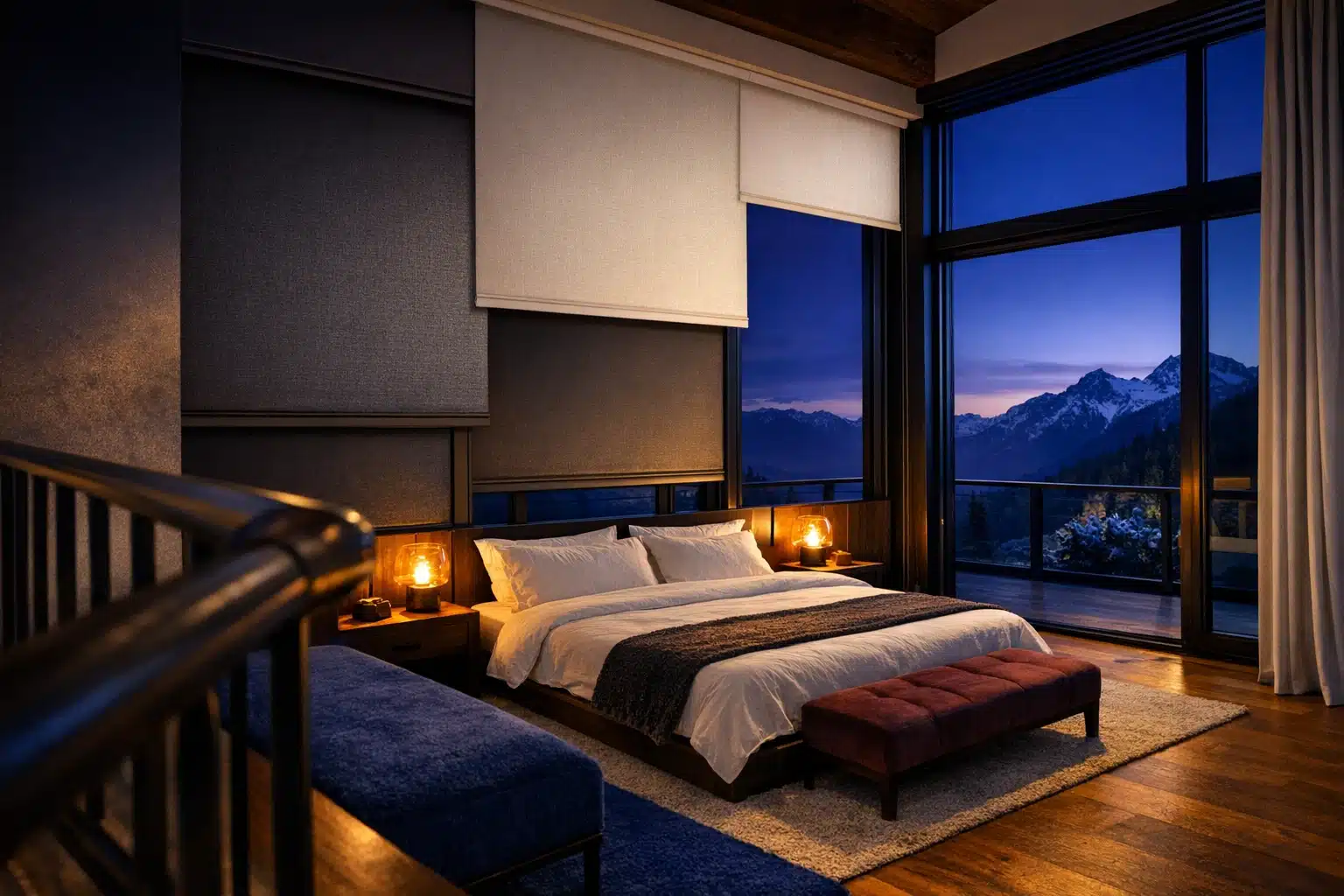
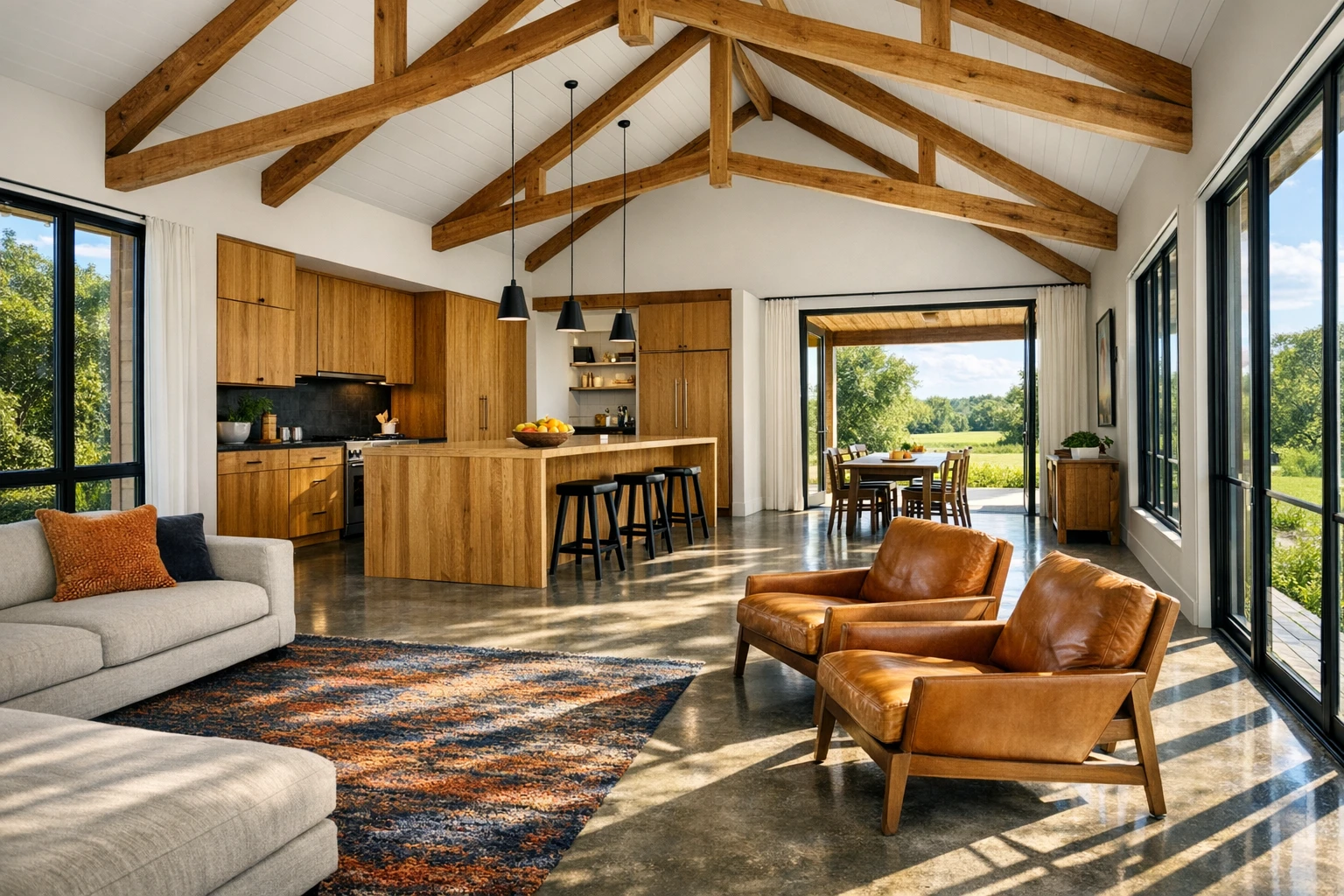
Ceiling height is one of the biggest advantages. Even a modest two-bedroom layout can feel expansive if the main living area has a vaulted ceiling or exposed trusses. That vertical lift creates drama without adding floor area. It also gives room for taller windows, which can bring in daylight and make the home feel connected to the landscape. If the budget does not allow dramatic structural features throughout, many owners focus the ceiling treatment in the central living zone and keep the bedrooms simpler. This contrast often works well, because bedrooms typically benefit from a quieter, more cocooned feeling.
Material selection helps define the mood. Wood accents can soften the industrial roots of a barndominium shell, while painted drywall keeps the interior bright and clean. Concrete floors are durable and practical, particularly in rural settings, but they often feel better visually when balanced with warm cabinetry, woven textures, or area rugs. Black-framed windows and matte metal lighting can nod to the building’s agricultural inspiration without making the home feel cold.
Several design moves deliver an outsized effect in two-bedroom homes:
- Use continuous flooring through the main spaces to reduce visual breaks.
- Install built-in storage benches, shelves, or window seats where walls would otherwise sit empty.
- Choose fewer, larger windows rather than many small ones when the view is strong.
- Let the kitchen island serve multiple roles, including prep, dining, and casual work.
Bathrooms and bedrooms benefit from the same discipline. A primary suite can feel generous with a well-organized closet and a shower that uses glass to preserve sightlines. The second bedroom becomes more versatile when it includes a standard closet, enough wall space for a desk, and durable finishes that suit guests or children. Good design in a compact barndominium is a little like good editing in writing: every element earns its place, and nothing clutters the message. The result is a home that feels calm, intentional, and much larger than its measurements suggest.
Budget, Structure, Storage, and the Realities of Daily Use
Design ideas are exciting, but the long-term success of a barndominium depends just as much on practical decisions behind the scenes. Two-bedroom plans often attract buyers because they promise efficiency, yet the budget can still drift if the structure becomes overly complicated or the finish package expands beyond the original vision. In many cases, the most cost-effective approach is a simple rectangular footprint with a straightforward roofline. That does not mean the house must look plain. It means money can be directed toward features that improve everyday life, such as insulation, quality windows, durable flooring, or a better kitchen layout.
Mechanical planning deserves early attention. HVAC, water heater placement, electrical runs, and plumbing routes all become easier when bathrooms, laundry, and kitchen areas are grouped thoughtfully. A beautiful plan can become frustrating if the utility room is undersized or if laundry noise spills into the living space. Storage is another issue that should never be left until the end. People often underestimate how much a small household still needs to store: coats, cleaning tools, seasonal gear, pantry overflow, luggage, pet supplies, and hobby equipment. In a barndominium, where the shell may encourage open space, enclosed storage keeps the interior from feeling visually busy.
Useful storage strategies include:
- A mudroom wall with hooks, cubbies, and closed cabinets near the main entry.
- A walk-in pantry or tall pantry cabinet bank close to the kitchen.
- Linen storage near the bathroom instead of relying only on vanity drawers.
- Garage, shop, or covered exterior storage for tools and bulky equipment.
Daily function should guide layout adjustments. If one resident works from home, even a compact desk niche with natural light can outperform a larger but poorly placed spare room. If pets are part of the household, durable finishes and easy exterior access matter more than decorative extras. If the site is rural, think carefully about porches, hardwearing entry floors, and whether the home needs a transition zone for muddy boots.
Energy performance also matters. Good insulation, air sealing, and orientation can improve comfort year-round and reduce operating costs over time. South- or west-facing glass may need shading depending on climate. Large open rooms can look impressive, but they must still heat and cool efficiently. The most satisfying two-bedroom barndominiums are rarely the ones with the most dramatic sketches. They are the ones that quietly handle real life without demanding constant compromise from the people living inside them.
Final Thoughts for Buyers, Builders, and Future Owners
If you are considering this housing style, the most important question is not whether a barndominium looks appealing online. It is whether the plan fits the rhythm of your life. A two-bedroom version can be an excellent choice for empty nesters, first-time rural homeowners, couples who want one flexible guest room, or small families who prefer quality over excess. It can also serve as a vacation property, an accessory dwelling on a larger site, or a long-term downsizing move that still feels distinctive. The format is adaptable, but only when the layout reflects actual habits instead of wish-list assumptions.
For readers comparing 2 Bedroom Barndominium – Layouts and Design Ideas with a standard ranch house or cottage, the advantage often lies in openness and flexibility. The shell can support larger communal space, higher ceilings, and a direct connection to porches, garages, or workshops. At the same time, the plan needs careful editing. Every wall, doorway, and storage zone should justify its presence. That is especially true in a home where two bedrooms must support privacy, guest use, work needs, and changing life stages.
A good final checklist includes questions like these:
- Will both bedrooms be used every day, or should one be designed for multiple roles?
- Is one bathroom truly enough for the household and regular visitors?
- Does the plan include a realistic amount of storage inside the conditioned space?
- Are the porch, entry, and laundry areas sized for the climate and the site?
- Does the budget favor lasting performance over cosmetic extras?
The strongest projects usually begin with modest ambitions and sharp priorities. Rather than chasing every trend, they focus on circulation, daylight, durability, and comfort. That is the real lesson behind 2 Bedroom Barndominium – Layouts and Design Ideas: a smaller home can still feel generous when its spaces are clearly organized and thoughtfully detailed. For anyone planning a build, reviewing floor plans, or deciding whether this style suits a changing household, that perspective is worth carrying into every decision. A well-designed two-bedroom barndominium does not rely on spectacle. It succeeds because it makes ordinary routines easier, calmer, and more enjoyable for the people who call it home.