Guide to Short Hair Wigs: Styles, Materials, Fit & Care Tips
Outline:
– Section 1: Style choices and face-shape harmony for short hair wigs
– Section 2: Fiber types, cap construction, and how materials change realism
– Section 3: Measuring, sizing, and comfort features for secure all-day wear
– Section 4: Care routines, styling techniques, and longevity tips
– Section 5: Buying strategies, budgeting, and sustainability-minded decisions
Introduction:
Short hair wigs are more than quick makeovers; they’re practical tools for personal style, protective styling, and confidence. Whether you want a pixie for summer heat, a bob for polished office days, or a textured crop for low-commitment change, short lengths can feel lighter, cooler, and easier to manage than longer alternatives. This guide brings together the key choices—shape, fiber, construction, fit, and upkeep—so you can move from “maybe” to “nailed it” with clarity.
Styles That Flatter: Pixies, Bobs, and Crops That Match Your Face Shape
Short hair wigs offer a world of silhouettes, from sharp pixies to airy shags. The magic lies in proportion—balancing features, neck length, and lifestyle. Short hair wigs offer a versatile, low-maintenance way to refresh your look, whether you prefer sleek pixies or textured bobs. This guide can help you
Face-shape pointers help narrow choices without boxing you in. Oval faces generally suit most cuts; try a classic bob that sits at the jaw for clean structure. Round faces often benefit from height at the crown and side-swept fringes that create angles, so a layered pixie or asymmetrical bob can add definition. Square faces soften with rounded layers or a feathery fringe that breaks up strong jawlines. Heart-shaped faces balance well with a chin-length bob or soft side pieces that echo cheekbones. If your face is long, consider a bob with a blunt fringe or gentle wave to visually shorten the length.
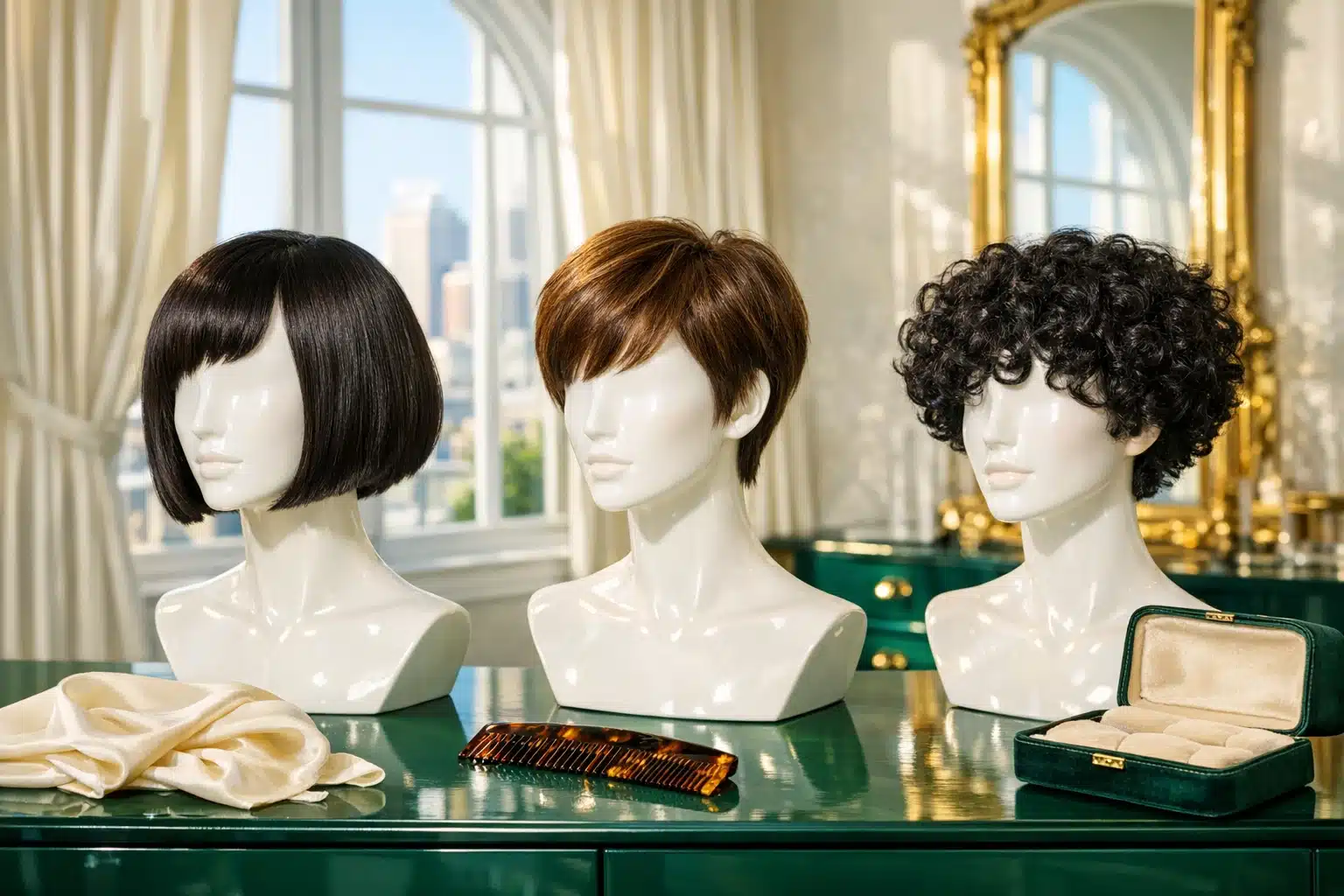
Texture changes everything. Sleek pixies read modern and put-together, while tousled shags add movement and can camouflage cowlicks or regrowth. Coily and curly options bring volume and lift, which can be especially flattering for smaller faces or those seeking dimension. For work-to-weekend versatility, a lightly layered bob with a side part adapts to both polished and casual outfits.
Try this style checklist for clarity:
– Want easy morning routines? A lightly layered pixie or a blunt bob minimizes daily restyling.
– Prefer face-framing softness? Side bangs and chin-length bobs add approachability and contouring.
– Need helmet-free bike commutes or hat-friendly looks? Cropped cuts with minimal crown volume sit well under caps.
– Love accessories? Short cuts spotlight earrings, scarves, and collars, turning small details into focal points.
Practical tip: start with pictures of shapes you love, then cross-check them against your hairline, forehead height, and neck length. A one-centimeter tweak to the bob’s hem or a few feathered layers at the temple can be the difference between “nice” and “nailed it.” If you’re unsure, a mid-length bob that hits between cheek and jaw is a forgiving anchor point, easy to trim shorter later.
Fibers and Construction: How Materials Influence Realism, Weight, and Styling
The fiber you choose dictates maintenance, movement, and durability. Synthetic fibers hold their style out of the box and resist humidity, making them dependable in variable weather. Heat-friendly synthetic offers styling flexibility with low-heat tools (often up to around 130–160°C / 266–320°F), though it may require gentler care to avoid frizzing over time. Human hair behaves like bio hair—natural movement, customizable styling, and the potential to last longer with proper care—but it typically costs more and requires routine heat protection.
Construction matters as much as fiber. Lace-front designs create a natural-looking hairline with hand-tied knots at the front; monofilament or “mono” tops allow multi-directional parting that mimics scalp. Fully hand-tied caps provide maximum movement and comfort for sensitive scalps, while wefted caps improve airflow and can feel lighter. Short styles commonly weigh 70–130 grams, which helps reduce neck strain and stay cooler in warm months.
Density and permatease influence silhouette. Moderate density (often labeled around 120–130%) suits most short cuts, avoiding a “helmet” effect while offering coverage. Slight permatease at the crown can boost lift on pixies or shags, helpful for round or flat crowns. If you prefer ultra-natural volume, look for lower density with strategic layering instead of heavy teasing.
Color techniques enhance realism without daily styling:
– Rooted shades emulate natural regrowth and reduce the need for perfect hairline placement.
– Multi-tonal blends add dimension so short cuts don’t look “one-note.”
– Subtle highlights around the face bring brightness without dramatic contrast.
If you’re choosing between fibers, consider your climate and schedule. Humid summers favor synthetics that retain shape; frequent stylers may appreciate human hair’s flexibility. For travel, wrinkle-resistant synthetics pack neatly and bounce back after unpacking. In day-to-day life, material and cap construction work together: a breathable wefted short bob in synthetic can mean a two-minute morning, while a human-hair pixie offers a “salon-fresh” blow-dry when you have time to play.
Fit, Sizing, and All-Day Comfort: Measure Once, Wear Confidently
Comfort starts with accurate measurements. Use a soft tape and record: circumference (hairline around the head), ear-to-ear across the crown, and front-to-nape. Typical cap size ranges are often labeled as petite (~51–54 cm), average (~54–57 cm), and large (~57–60 cm). If you’re in between, adjustable straps can fine-tune fit by about 1–2 cm. Ear tabs help with alignment; when they sit evenly, the hairline and parting look more natural.
Short hair wigs offer a versatile, low-maintenance way to refresh your look, whether you prefer sleek pixies or textured bobs. This guide can help you
Skin sensitivity calls for thoughtful materials. Hand-tied sections reduce friction, and soft velvet or silicone linings at the perimeter can minimize pressure points. If you’re active or dealing with hair loss, consider light grip solutions—silicone edges, wig liners, or medical-grade adhesives as recommended by a professional. For glasses wearers, slim ear tabs and careful temple placement keep frames from pushing hair out of place.
Comfort checklist:
– Try your wig for 30–60 minutes at home to test hot spots before committing to a full day.
– Bend forward and shake gently; if it shifts, tighten straps one notch or add a liner.
– If you notice redness after wear, rotate between two caps or add a breathable bamboo liner to disperse pressure.
– Keep lace trimmed conservatively; excess lace can itch, but trimming too far can reduce realism.
Ventilation is another detail that pays off in short styles. Wefted caps breathe efficiently, often feeling cooler than denser constructions. If you live in a hot climate, pair a lightweight cap with shorter nape lengths to reduce neck warmth. Finally, remember that hairlines vary: pull a few fibers forward at the temples, or blend with a touch of your bio hair if available, to soften edges and create a seamless transition.
Care, Styling, and Longevity: A Simple Routine That Preserves Shape
Short styles are forgiving, but a light routine preserves fiber quality and silhouette. Synthetic wigs usually need washing every 6–10 wears, depending on sweat and environment; human hair can go 7–14 wears with dry-shampoo touch-ups. Use cool to lukewarm water and a wig-formulated cleanser. Avoid scrubbing—gently swish, then rinse thoroughly. Conditioner belongs mid-length to ends; keep it off knots and roots to maintain lift and prevent shedding. Pat dry in a towel, never wring, and let it air-dry on a stand that doesn’t stretch the cap.
Heat and friction are the usual culprits of wear. For heat-friendly synthetic, set tools to low (many users stay under 150°C / 302°F) and work in brief passes. Human hair appreciates heat protectant and occasional nourishing masks. To reduce friction frizz at the nape—common with scarves or coat collars—rotate collars, use silk-lined hoods, or apply a tiny drop of silicone-free serum on ends.
Quick daily routine:
– Shake lightly to release fibers and restore volume.
– Use a wide-tooth comb, starting from ends and moving upward; avoid fine-tooth brushes on synthetic.
– Finger-style bangs or use a low, brief blast of warm air from a distance to realign parting.
– Store on a collapsible stand away from direct sunlight and heat sources.
Expected longevity varies by fiber and frequency. With regular wear, synthetics may keep peak appearance for 3–6 months; heat-friendly synthetics can require earlier refresh in high-friction zones; human hair often lasts 6–12 months or longer with mindful care. Keep a simple log of washes and styling sessions—small habits like rotating between two wigs or scheduling a monthly deep condition can extend life and keep a short silhouette crisp. Finally, remember that less is more: a light mist of water often revives shape faster than heavy product layers.
Buying Smart: Budget, Color Matching, Returns, and Sustainability
Set expectations by mapping budget to needs. Short synthetic styles can start in an accessible price range, while human hair usually commands a higher investment due to sourcing and labor. Consider cost-per-wear: a mid-priced synthetic worn daily for four months can be comparable in value to a higher-priced human-hair piece worn half as often. Look for clear fiber labels, cap construction details, and density notes; transparent product pages with measurements (front, crown, sides, nape) reduce guesswork.
Color matching is easier with short wigs because there’s less surface area to blend, but undertone matters. Cool complexions often play well with ashy browns or icy blondes; warm undertones pair nicely with golden hues or copper accents. If you’re uncertain, pick a multi-tonal shade or a softly rooted option for forgiveness at the hairline. When shopping online, compare photos in natural light and check user reviews that mention face shape, cap size, and climate; those clues often align closer to real-world wear than studio shots.
Short hair wigs offer a versatile, low-maintenance way to refresh your look, whether you prefer sleek pixies or textured bobs. This guide can help you
Keep policies in mind. Favor sellers who list return windows, hygienic seals, and exchange options; inspect the lace and fiber movement as soon as you unbox. For sustainability, extend a wig’s life with proper care, then consider donation programs when it still has wearable life. Choose cool-water washes, air-dry to save energy, and opt for reusable wig caps and long-lasting detangling tools. Minimal packaging and consolidated shipping reduce waste.
Travel and storage tips for short styles:
– Pack in a soft, breathable pouch with the interior lined by a hairnet to preserve shape.
– Bring a folding stand and a small, airline-friendly detangling comb.
– Avoid leaving a wig in a hot car; sustained heat can warp synthetic fibers.
– Label a tiny care card (wash intervals, heat limits) so maintenance stays consistent on the road.
Ultimately, prioritize clarity over impulse: define your daily routine, climate, and style goals first, then shortlist fibers and caps that match. Short lengths reward thoughtful choices with quick mornings, comfortable wear, and clean silhouettes that translate from casual coffee to evening plans without fuss.
Conclusion:
Short styles deliver practical beauty for real life: lighter caps, cooler wear, and fast routines that still look intentional. With a bit of planning—shape, fiber, construction, and fit—you can make confident choices that feel natural and hold up to daily schedules. Keep care simple, buy with a plan, and revisit measurements as your needs change. Your next haircut might come in a box, but your look will feel entirely your own.