US Fiberglass Pools Guide: Types and Detailed Information
A fiberglass pool can turn a plain backyard into a practical retreat, but the real value lies in understanding the product before the excavation crew arrives. Material quality, shell design, soil conditions, installation access, and long-term upkeep all shape how well the pool performs. This article looks past showroom appeal to explain how fiberglass pools are built, which layouts suit different homes, and what buyers should compare before signing a contract.
Outline and Why Fiberglass Pools Matter
Before diving into specifications, it helps to step back and see the full picture. A swimming pool is not just a decorative feature tucked behind the house. It is a long-term structure that affects family routines, utility costs, maintenance habits, and even the way a yard is used through changing seasons. For many U.S. homeowners, fiberglass stands out because it sits in an appealing middle ground: faster to install than concrete, often easier to maintain than more porous surfaces, and visually polished straight out of the mold. That mix of convenience and performance explains why demand has grown in suburban neighborhoods, vacation properties, and compact urban lots alike.
Think of this opening section as a practical Fiberglass Pools Guide to the questions buyers usually need answered first. Rather than treating the topic like a simple product catalog, this article is organized around real decisions people make during planning. The goal is to show not only what fiberglass pools are, but also how they behave over time, what design limits exist, and which costs appear after the initial quote. A pool can feel like a postcard on day one and a chore by year three if the early choices are rushed. Good planning changes that story.
-
How fiberglass pool shells are manufactured and why that affects strength and finish quality.
-
How fiberglass compares with concrete and vinyl-lined pools in upkeep, installation speed, and customization.
-
Which shapes, depths, and built-in features suit families, lap swimmers, entertainers, or small yards.
-
What site access, soil, drainage, and local permitting mean for timeline and budget.
-
How to care for water chemistry, surfaces, equipment, and seasonal use over the long run.
There is also a lifestyle angle that brochures rarely capture. A pool is part structure, part stage set. One household imagines peaceful morning laps. Another pictures children circling the shallow end with inflatable toys. Someone else wants a clean rectangle beside a modern patio for evening gatherings. Those different uses should shape the choice from the beginning. By moving through the topic in a clear order, this article helps readers connect technical details with everyday living, which is often the difference between a pool that merely looks good and one that truly fits the home.
What Fiberglass Pools Are and How They Compare With Other Pool Materials
Fiberglass pools are factory-molded shells made from layers of fiberglass reinforced with resin and finished with a gel coat surface. Instead of building the vessel piece by piece in the yard, the manufacturer creates the shell off-site, ships it to the property, and lowers it into an excavated hole using heavy equipment. That production method is one of the defining features of fiberglass. Because the shell arrives preformed, the installation phase in the backyard is often shorter and more standardized than a concrete build, where crews shape, steel-reinforce, spray, cure, plaster, and finish the pool in place.
The smooth gel coat surface is frequently cited as a major advantage. It feels comfortable underfoot, resists snagging on swimsuits, and is less porous than plaster-based finishes. In practical terms, that can mean fewer places for algae to cling, which may reduce the amount of brushing and chemical correction needed compared with rougher surfaces. That said, low maintenance does not mean no maintenance. Water balance still matters, filters still need attention, and neglect can still damage equipment or stain surfaces. Fiberglass simply tends to be less demanding in day-to-day care when compared with more porous pool interiors.
When homeowners compare materials, three options usually dominate the discussion:
-
Fiberglass: quick shell installation, smooth finish, limited by transportable shapes and sizes.
-
Concrete or gunite: highly customizable, suitable for complex designs, but typically slower to build and more maintenance-intensive.
-
Vinyl liner: often lower upfront cost, softer feel, but liners eventually need replacement and can be punctured.
Fiberglass also behaves differently in terms of construction risk. Because the shell is made in a controlled factory environment, the finish can be more consistent than a field-applied surface. However, the backyard still introduces variables such as groundwater, improper backfill, or poor leveling. A well-made shell installed badly can perform poorly, just as an average shell installed by a skilled crew can last for many years. This is why product quality and installer quality should be judged together, not separately.
Another point worth noting is temperature. In many regions, fiberglass surfaces warm a bit more comfortably in the sun than some other finishes, though water temperature still depends mainly on climate, exposure, and heating systems. Over time, the shell’s flexibility can be beneficial in certain soil conditions, but it is not a magic shield against every ground movement issue. In simple terms, fiberglass offers an efficient, durable, and user-friendly pool system, yet its best performance depends on proper manufacturing, sound site preparation, and realistic expectations.
Choosing Designs and Fiberglass Pools Types for Different Homes
Understanding Fiberglass Pools types is easier when you stop looking at marketing photos and start sorting pools by purpose. Most buyers are not really choosing between “blue shell A” and “gray shell B.” They are choosing between a family play pool, a compact plunge pool, a sleek lap pool, or a social pool built around tanning ledges and conversation areas. The right choice depends on who will use the pool most, how much deck space is available, and whether the backyard is meant for exercise, entertaining, quiet relaxation, or a bit of everything.
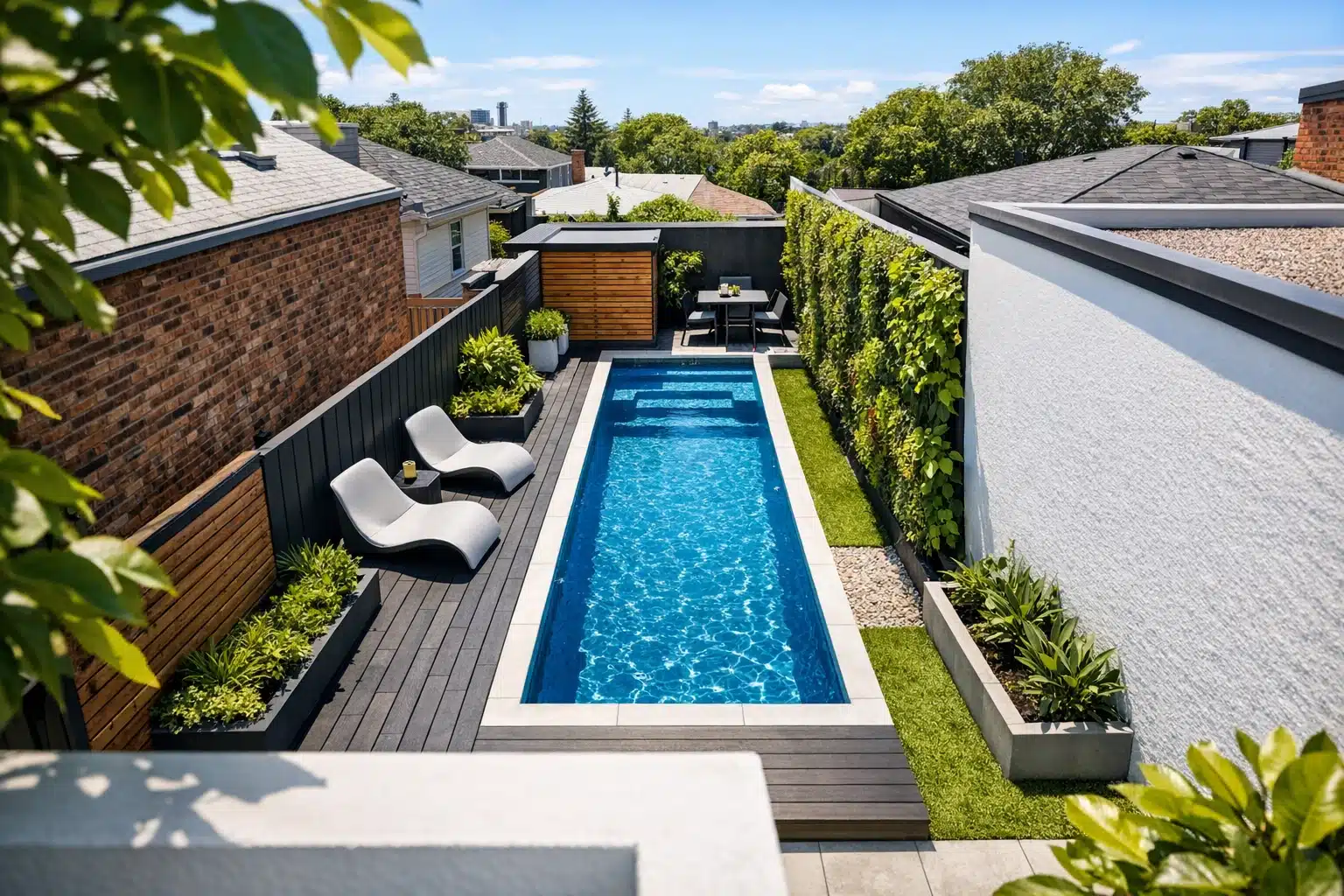
The most common fiberglass designs in the U.S. include rectangular, freeform, plunge, and lap-oriented models. Rectangular shells pair well with modern landscaping and make automatic covers easier to plan. Freeform pools soften the look of a yard and often blend naturally with curved patios, plantings, and rock features. Plunge pools are especially useful for compact lots, courtyards, or homeowners who want the cooling effect and visual appeal of a pool without committing to a large footprint. Lap pools are long and narrow, created for movement rather than crowd capacity. Many manufacturers also offer hybrid layouts with a tanning shelf, integrated bench seating, built-in steps, or a spillover spa section attached to the main shell.
-
Shallow, family-friendly pools support casual play and social use.
-
Deep-end models work better for diving-adjacent play, though true diving requires careful design and safety compliance.
-
Tanning ledges appeal to homeowners who want lounge seating in a few inches of water.
-
Bench seating and wraparound steps improve accessibility and conversation space.
-
Narrow shells can be ideal where side-yard access and lot width are limited.
Size matters, but proportion matters more. A long pool squeezed into a cramped yard can leave too little deck space for chairs, circulation, and equipment access. On the other hand, a small shell placed thoughtfully may create a more elegant and functional outdoor room. A backyard often works best when water, hardscape, shade, and planting feel balanced, like parts of one composition rather than unrelated upgrades installed over several summers.
Depth profile is another overlooked decision. Families with young children often prefer broad standing areas and gradual transitions. Adults focused on exercise may prioritize uninterrupted length. Entertainers may care more about seating ledges and shallow gathering zones than maximum depth. Transport restrictions also influence available Fiberglass Pools types, because shells must be moved from factory to site on public roads. That means a fiberglass pool cannot be infinitely wide, long, or unusually shaped in the same way a custom concrete pool can. Within those limits, however, there is still plenty of variety. The smartest buyers choose the shell that fits real habits, not just the one that looks dramatic in an advertisement.
Installation Planning, Budget Reality, and Common Project Challenges
A fiberglass pool project often feels fast only after months of planning. The visible part begins when excavation starts, but the real process usually begins earlier with design choices, permit applications, utility marking, drainage planning, and contractor scheduling. In many U.S. markets, homeowners are surprised to learn that the shell itself is only one piece of the final price. Excavation, trucking, crane access, electrical work, filtration equipment, decking, fencing, and landscaping can significantly change the budget. It is possible for two projects using the same shell model to land at very different final costs because site conditions are never identical.
As a broad rule, fully installed fiberglass pools in the United States commonly start in the mid-five-figure range and can rise well beyond that once premium decking, heating, automation, lighting, water features, and retaining work are added. Challenging access can also increase cost. If a crane must lift the shell over a house, fence lines need temporary removal, or a narrow lot limits machinery movement, labor and equipment charges may climb. This is one reason quotes should be compared line by line rather than judged by the headline number alone.
A typical installation sequence looks something like this:
-
Site review, measurements, and permit preparation.
-
Excavation and base preparation.
-
Delivery of the shell and crane placement into the excavation.
-
Leveling, plumbing, electrical setup, and backfilling.
-
Equipment startup, coping or deck installation, and final inspections.
Although shell placement can happen in a day, the entire project often takes several weeks, and weather can stretch that timeline. Heavy rain, unstable soil, or groundwater pressure may require additional drainage solutions. Good installers pay close attention to compaction, water balance between the pool interior and the surrounding backfill during filling, and proper support around steps, benches, and corners. These details are not glamorous, but they are critical. A beautiful shell set on a poor base is like elegant furniture placed on a crooked floor.
Buyers should also ask about warranties with clear eyes. Shell warranties can be useful, but they do not replace the need for a competent local installer and a written scope of work. Clarify what is covered, who handles service, and whether cosmetic issues, structural defects, or equipment failures fall under different providers. When you gather bids, request references for projects similar to your yard conditions. Rocky soil, sloped lots, cold climates, and tight-access urban properties each introduce their own challenges. The more specific the planning, the fewer surprises arrive after the dig begins.
Maintenance, Long-Term Value, and Final Advice for US Homeowners
Once a fiberglass pool is installed, the long-term experience depends less on dramatic repairs and more on consistent habits. Owners are often drawn to fiberglass because the smooth, nonporous surface can make routine care simpler than with rougher interiors. That benefit is real, but it works best when paired with steady water testing, proper circulation, and timely equipment checks. A neglected fiberglass pool can still develop staining, scale, cloudy water, or equipment wear. The reward of owning one is not freedom from responsibility; it is a more manageable maintenance rhythm.
The core tasks are straightforward. Keep water chemistry within recommended ranges, skim debris before it breaks down, brush steps and waterline areas, monitor filter pressure, and inspect pumps, heaters, and automation systems before small issues become expensive ones. In colder states, winterizing may include lowering water to the correct level for the closing method, protecting plumbing lines from freeze damage, and covering the pool securely. In warm regions with year-round use, owners should watch evaporation, sanitizer demand, and seasonal pollen or storm debris. Climate changes the schedule, but not the principle: small attention prevents large headaches.
This is also the right place to gather the Fiberglass Pools detailed information that buyers often want before committing. Ask about gel coat color options and whether darker finishes affect visible wear. Ask how the builder handles groundwater and drainage. Ask what water chemistry range the manufacturer expects for warranty support. Ask who services the equipment after installation and what startup training is included. A reputable company should answer these questions clearly without hiding behind vague promises.
-
Choose a pool size that leaves enough deck space for real outdoor living.
-
Compare installer reputation as seriously as shell brand reputation.
-
Budget for fencing, electrical work, and landscaping, not just the pool vessel.
-
Match depth and layout to actual use rather than occasional fantasy use.
-
Learn the maintenance routine before handover day so the first season starts smoothly.
For U.S. homeowners deciding whether fiberglass is the right path, the main takeaway is simple. Fiberglass pools can offer a polished appearance, efficient installation, comfortable surfaces, and easier upkeep, especially for households that want reliable function without a highly customized construction process. They are not perfect for every yard or every design ambition, but they are a strong choice for buyers who value speed, predictability, and practical maintenance. If that sounds like your priorities, a well-chosen fiberglass model installed by an experienced crew can deliver years of daily use, weekend fun, and the quiet satisfaction of a backyard that finally works the way you imagined it would.