Mini Farmhouses – Charming and Functional Small-Scale Homes
Why Mini Farmhouses Matter and What This Article Covers
Mini farmhouses sit at the crossroads of simplicity, practicality, and rural charm, offering a way to live comfortably without committing to a sprawling house or a complicated property. They appeal to first-time builders, downsizers, hobby farmers, and remote workers who want beauty and function in one manageable footprint. This article explores how these compact homes are designed, what they cost, and why their small scale can support a surprisingly rich daily life.
The appeal of small-scale living is not just aesthetic. In many regions, land prices, construction costs, and maintenance demands have made large houses less realistic for ordinary households. At the same time, more people want a home that feels rooted, useful, and connected to nature. That is where Mini Farmhouses – Charming and Functional Small-Scale Homes enter the conversation. They borrow from classic farmhouse architecture, yet they translate that character into a more practical size, often ranging from roughly 400 to 1,200 square feet depending on the site, local rules, and the owner’s goals.
Before diving into design and cost, it helps to set an outline for the discussion. This article will cover:
- what defines a mini farmhouse and why the concept has become relevant
- how layout, storage, and light shape small-scale comfort
- which materials and building strategies influence budget and durability
- how these homes support gardening, homesteading, and flexible modern routines
- what future owners should consider before building or buying
Mini farmhouses are especially interesting because they answer several modern problems at once. They can reduce cleaning time, energy use, and construction waste while still offering visual warmth through gabled roofs, porches, natural materials, and straightforward floor plans. They also encourage intentional choices. In a large home, it is easy to hide poor planning behind extra rooms. In a smaller one, every wall, window, and cabinet must earn its place.
There is also a cultural dimension. Many homeowners are drawn to places that feel slower, steadier, and more tactile. A mini farmhouse can suggest that mood without requiring a full agricultural operation or a large family property. It might sit on a few rural acres, on the edge of a small town, or even on a compact lot designed to feel open through landscaping. The result is not a fantasy cottage but a livable, adaptable home with a clear identity. That makes the topic relevant not only to buyers and builders, but to anyone interested in how housing can become both more modest and more meaningful.
Design Principles: How Small Farmhouse Layouts Balance Beauty and Use
A successful mini farmhouse does not merely shrink a traditional farmhouse. It rethinks space so that movement, storage, daylight, and comfort all work together. This distinction matters. A poorly designed small house can feel cramped within minutes, while a well-planned one can feel calm, open, and surprisingly generous. The secret is less about square footage than proportion, layout discipline, and the relationship between indoor and outdoor areas.
One of the strongest design principles is the use of an open central living zone. In many mini farmhouse plans, the kitchen, dining area, and sitting room share one main volume. This reduces hallway space, allows light to travel farther, and makes the home feel social rather than segmented. Vaulted ceilings or exposed rafters often add visual height, giving a small footprint a sense of lift. A modest room with a high ceiling and good windows can feel more welcoming than a larger room cut off from daylight.
Storage is the next major issue. In a compact home, clutter grows quickly if there is no built-in strategy to control it. Designers often rely on:
- window benches with hidden compartments
- floor-to-ceiling pantry walls
- under-stair drawers in lofted layouts
- mudrooms or entry nooks for boots, coats, and tools
- multi-use furniture such as dining tables with storage bases
These solutions are not decorative extras. They are structural to the comfort of daily life. A small farmhouse intended for rural or semi-rural use may also need space for practical items that urban apartments rarely consider, such as seed trays, laundry boots, pet supplies, jackets, and seasonal equipment. If that practical layer is ignored, the charming look fades fast once real routines begin.
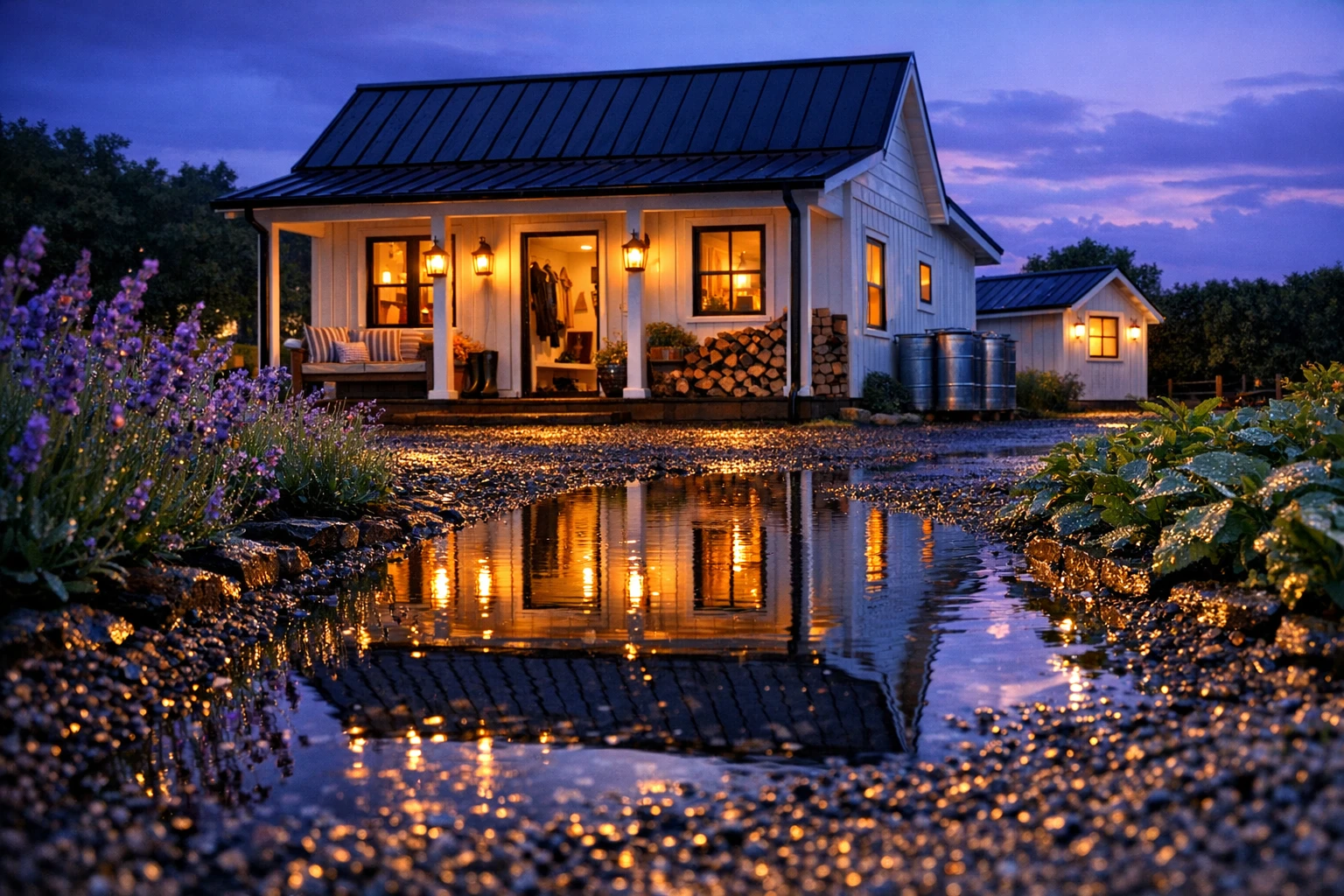
Exterior design also plays a functional role. Covered porches, for example, are a farmhouse signature, but they are useful too. They create shade, protect entry doors from weather, and extend living space in mild seasons. Large kitchen windows overlooking a garden or a side yard do more than frame a pleasant view. They connect the owner to daily tasks outside, whether that means watching children, checking raised beds, or seeing when a storm is rolling in.
Compared with generic small homes, mini farmhouses often feel warmer because their materials and forms are familiar. Board-and-batten siding, metal or shingled roofs, simple trim, and neutral palettes create an identity that is humble yet distinctive. The best versions avoid turning nostalgia into costume. Instead, they use traditional cues in service of current needs: energy efficiency, flexible rooms, easy upkeep, and a plan that works from morning coffee to muddy evening chores.
Materials, Sustainability, and the Real Cost of Building Small
Many people assume that a mini farmhouse is automatically inexpensive. The truth is more nuanced. A smaller house usually requires fewer total materials than a large one, but the cost per square foot can still be relatively high because kitchens, bathrooms, utility systems, and custom storage are concentrated into a compact plan. In other words, building small can reduce the overall budget, yet it does not guarantee a bargain. The final price depends on location, labor, finishes, site work, foundation type, and whether the design is standardized or highly customized.
That said, mini farmhouses often make financial sense because they encourage disciplined choices. A simpler roofline, a rectangular footprint, and modest finish selections can keep costs more predictable. By contrast, multiple dormers, complex structural spans, or luxury fixtures can raise the budget quickly. In many markets, site work is one of the most underestimated expenses. Clearing land, installing utilities, creating driveway access, and meeting septic or well requirements may affect the total cost as much as the house itself.
Material selection is where durability and character meet. Owners frequently choose wood siding, fiber cement boards, metal roofing, stone accents, and engineered hardwood or polished concrete floors. Each option has trade-offs:
- wood offers natural warmth but may need more maintenance
- fiber cement can mimic traditional farmhouse textures with better resistance to weather and pests
- metal roofing often lasts a long time and sheds rain and snow efficiently
- high-performance windows cost more up front but can improve comfort and energy use over many years
Sustainability is another reason these homes attract attention. A smaller envelope generally takes less energy to heat and cool, especially when paired with good insulation, air sealing, and efficient mechanical systems. Some owners add solar panels, rainwater capture, composting setups, or graywater irrigation where regulations allow. Even without advanced systems, a compact, carefully oriented home can reduce resource use simply by needing less of everything. Fewer rooms require less lighting. Smaller floor areas demand fewer finish materials. Reduced storage capacity also encourages less accumulation of unused items.
Still, there is an important comparison to keep in mind. A badly built small house is not more sustainable than a well-built modest house of slightly larger size. Longevity matters. If materials fail early, or if the layout becomes unlivable and prompts constant renovations, the environmental and financial benefits shrink. The smartest path is usually to build as small as you can live well in, not as small as possible for the sake of a trend. That distinction turns a mini farmhouse from a nice idea into a durable investment in everyday life.
Daily Life in a Mini Farmhouse: Land Use, Routine, and Long-Term Flexibility
The image of a farmhouse often brings to mind acres of fields, chickens wandering near a fence, and a kitchen table catching the last light of the day. In reality, mini farmhouses support a wide range of lifestyles, from light gardening on a suburban edge lot to serious hobby farming on several rural acres. Their strength lies in flexibility. They can be a primary residence, a retirement home, a guest house, or a weekend property that gradually becomes something more permanent.
One reason these homes work so well is that they shift part of daily life outdoors. A person living in a mini farmhouse may use a porch as a morning workspace, a shed as overflow storage, a greenhouse as an extension of the kitchen, or a gravel courtyard for meals in warm weather. This outdoor dependence is not a limitation when planned properly. It is part of the rhythm. Instead of pushing every activity indoors, the property becomes a collection of useful zones connected by short, purposeful transitions.
That rhythm can be especially rewarding for people interested in growing food, keeping a small flock of hens where allowed, or managing a few practical outbuildings. A mini farmhouse on a modest parcel can support:
- raised vegetable beds and herb gardens
- a small orchard or berry patch
- rain barrel systems for irrigation
- a workshop, studio, or home office in a detached structure
- seasonal storage for tools, feed, bicycles, or outdoor furniture
At the same time, a compact farmhouse can suit people who have no intention of farming at all. Some simply want a house that feels grounded rather than oversized. Remote workers may appreciate lower upkeep and a direct connection to the outdoors. Retirees often value single-level plans, low maintenance demands, and the ability to age in place without caring for empty rooms. Young families may see the model as a way to enter homeownership while reserving more money for land, travel, or future flexibility.
Long-term use should always be considered. A loft bedroom may look appealing in photos, but it may not work well for older residents or for households with small children. A single bathroom may be manageable for one or two people, yet frustrating for guests or a growing family. Likewise, storage for coats and boots may seem like a tiny detail until the first wet winter arrives. A mini farmhouse succeeds when it supports ordinary days gracefully, not just picturesque moments. That means thinking ahead: where groceries land, where muddy clothes go, where a dog sleeps, where mail collects, where guests stay, and where work happens when the weather turns rough. Those practical questions are what transform charm into real livability.
Planning Ahead: Who Should Consider a Mini Farmhouse and What to Evaluate First
Mini farmhouses are not a universal answer, but they can be an excellent fit for the right homeowner. The best candidates are usually people who value efficient space, outdoor living, and a clear sense of purpose in their home. They may be downsizing from a larger property, starting fresh with a first build, or looking for a manageable place that still has personality. What matters most is not whether the style is fashionable, but whether the house supports the way its occupants truly live.
Before buying plans, purchasing land, or touring listings, it is worth evaluating a few core questions. How much interior space do you genuinely use each day? Are you comfortable with multi-use rooms, or do you need separation for work, sleep, and entertaining? What local zoning rules affect outbuildings, animals, setbacks, and utility installation? These questions may sound technical, but they shape the success of the project far more than paint color or countertop material.
Prospective owners should also create a realistic priority list. For example:
- Is single-level living essential?
- Will you need a mudroom or utility entry?
- How important is a full-size kitchen?
- Do you expect guests to stay overnight?
- Will the property need room for tools, gardening equipment, or a future studio?
Budget planning should include more than construction. Insurance, taxes, driveway maintenance, water systems, heating choices, and landscaping all affect the long-term experience. A smaller house can indeed be easier to manage, but only if the overall property is planned wisely. In some cases, spending slightly more on insulation, windows, drainage, or built-in storage creates a home that feels better every single day. Those are often the upgrades owners appreciate most after move-in.
For readers drawn to this housing style, the key takeaway is simple: start with function, then refine the charm. A good mini farmhouse should feel honest. It should welcome daily routines, adapt to changing needs, and offer comfort without waste. If you want a home that connects beauty with usefulness, this path deserves serious consideration. If you want endless extra rooms, it may not be the right match, and that is perfectly fine.
In conclusion, mini farmhouses are especially well suited to people who want thoughtful living rather than excess. They offer a strong middle ground between rustic romance and modern efficiency, giving homeowners a chance to build or buy with more intention. For first-time owners, retirees, hobby gardeners, and anyone craving a simpler but still stylish home, they present a compelling model: small enough to manage, flexible enough to grow with, and distinctive enough to feel like a place with real character.