Epoxy Resin Flooring: Common Uses, Styles & Benefits
Outline and Introduction
Few upgrades change a room as dramatically as a resin floor that turns plain concrete into a seamless, hard-working surface. In garages, clinics, warehouses, kitchens, and retail spaces, epoxy can answer practical needs while also sharpening the overall look of the room. This guide explains how the material works, where it performs best, which styles are most practical, and what buyers should weigh before a single coat is mixed.
The roadmap behind Epoxy Resin Flooring: Common Uses, Styles & Benefits begins with a simple idea: a floor is not just something you walk on. It absorbs impact, resists spills, influences maintenance costs, and quietly shapes the mood of a space every day. A glossy showroom floor sends a different message from a dusty slab in a workshop. A hygienic, easy-to-clean clinic surface serves a different purpose from a decorative metallic finish in a basement lounge. That range is exactly why epoxy flooring deserves careful attention.
Before moving into technical details, it helps to see the article structure at a glance:
- What epoxy resin flooring is and how the system bonds to concrete
- Where epoxy is commonly used in homes, commerce, and industry
- Which styles, finishes, and textures suit different environments
- What benefits make epoxy attractive, and which limitations buyers should not ignore
- How homeowners, business operators, and facility managers can decide whether it fits their needs
Interest in epoxy floors has grown because many property owners want surfaces that do more than cover concrete. They want durability, easier cleaning, resistance to stains and chemicals, and a finished appearance that feels intentional rather than purely utilitarian. In busy spaces, those goals matter. A floor that reduces dust, brightens the room by reflecting light, and withstands rolling equipment can support daily operations in subtle but meaningful ways. That is why epoxy flooring is discussed not only in design conversations, but also in maintenance planning, commercial fit-outs, and renovation budgets.
What Epoxy Resin Flooring Is and How It Works
Epoxy resin flooring is usually a multi-layer flooring system created by mixing resin with a hardener, then applying that blend over a properly prepared substrate, most often concrete. Once combined, the materials react and cure into a rigid, durable surface. That curing process is what separates epoxy from ordinary paint. Paint mainly dries as solvents evaporate, while epoxy forms a stronger chemical bond and a denser finished layer. In practical terms, that usually means better adhesion, better wear resistance, and better performance under mechanical stress when the system is installed correctly.
A typical epoxy floor is not just one mysterious coat poured from a bucket. It often includes several parts working together:
- A primer to improve adhesion and help seal the substrate
- A base or body coat that builds thickness and durability
- Optional decorative elements such as color flakes, quartz, or metallic pigments
- A topcoat that adds chemical resistance, UV stability, or slip resistance depending on the product chosen
Thickness varies by system. Thin coatings may be well under 1 millimeter, self-leveling installations often fall around 1 to 3 millimeters, and heavy-duty mortar systems can be thicker still. Those numbers matter because the intended use should guide the specification. A light residential storage room does not need the same build as a loading zone exposed to forklifts, dropped tools, or chemical splash.
Preparation is the part many people underestimate, yet it is often the difference between a floor that lasts and one that peels. Installers usually grind or shot-blast the slab to remove contaminants and open the concrete surface. Cracks may need repair, oil-stained areas may need treatment, and moisture conditions must be checked. If vapor pressure is rising through the slab, even a premium coating can fail. That is why experienced contractors focus on moisture testing, profile standards, and repair details before they talk about colors.
Epoxy is also part of a broader resin flooring family. In some projects, polyurethane or polyaspartic topcoats are added to improve UV resistance, flexibility, or faster return to service. Compared with bare concrete, epoxy offers a smoother and more controlled finish. Compared with polished concrete, it usually provides more decorative freedom and better chemical resistance, though polished concrete may appeal where a breathable mineral surface is preferred. In short, epoxy works best when the system, substrate, and use case are matched intelligently rather than chosen on appearance alone.
Where Epoxy Floors Are Commonly Used
One reason epoxy flooring remains popular is its unusual range. The same core technology can serve a home garage, a hospital corridor, a production area, or a boutique retail store, but each environment uses it for slightly different reasons. In residential settings, epoxy is especially common in garages, basements, utility rooms, and workshops. Homeowners often want a floor that resists tire marks, oil drips, road salt, and dusty concrete powder. A well-finished epoxy garage floor can also make the space feel less like a storage box and more like an extension of the home.
Commercial spaces use epoxy for image as well as performance. Showrooms, salons, restaurants, and retail interiors may choose a seamless floor because it looks clean and modern while being easier to mop than tile with many grout lines. In offices and public-facing businesses, color consistency and reflectivity can brighten interiors and contribute to a polished first impression. For food-related spaces, the attraction is often hygiene and washability, though system selection must match actual cleaning routines, thermal exposure, and slip-risk requirements.
Industrial use is where epoxy often shows its toughest side. Warehouses, plants, maintenance shops, and logistics spaces value coatings that can tolerate pallet traffic, abrasion, spills, and frequent cleaning. In these places, the floor functions almost like part of the operating system of the building. Line markings can be integrated for pathways and safety zones, and different formulations can be chosen for chemical resistance or improved traction. Common applications include:
- Automotive workshops and service bays
- Warehouses and distribution centers
- Healthcare facilities and laboratories
- Commercial kitchens and food preparation rooms
- Schools, locker areas, and public utility corridors
Healthcare and laboratory environments deserve special mention because seamless floors can simplify cleaning protocols and reduce places where dirt may accumulate. That does not mean every epoxy floor is automatically suitable for a medical setting, but properly specified systems can support sanitation goals. Educational buildings and civic facilities also use resin floors because they can balance durability with manageable maintenance.
The phrase Epoxy Resin Flooring: Common Uses, Styles & Benefits fits the market well because use case drives nearly every later decision. A decorative flake floor in a suburban garage is not the same product strategy as an anti-slip quartz system in a commercial kitchen. Even within a single building, different rooms may require different textures, topcoats, and performance standards. The best results come when owners start by asking how the floor will actually be used on an ordinary Tuesday, not how it looks in a brochure on a sunny afternoon.
Popular Styles, Finishes, and Design Options
If epoxy had only one look, it would not have become such a versatile design tool. The material can swing from industrially simple to surprisingly expressive, which is why it appeals to both facility managers and homeowners with a creative streak. Solid-color epoxy remains the classic option. It delivers a clean, uniform appearance and works well where clarity, brightness, and easy maintenance matter more than visual drama. Gray, beige, white, and safety colors are common in workshops and commercial settings, while darker shades can create a sharper, more contemporary look in residential spaces.
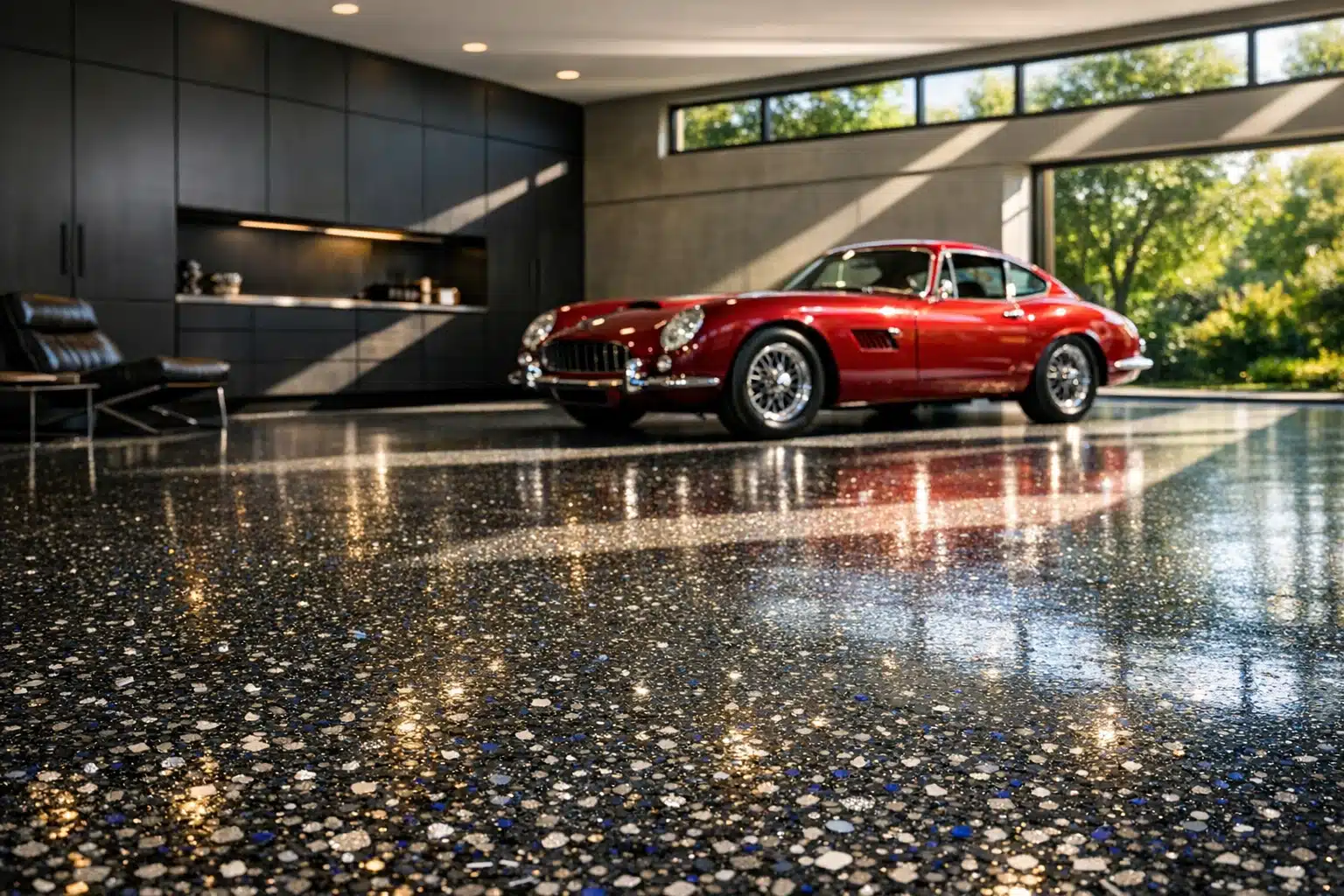
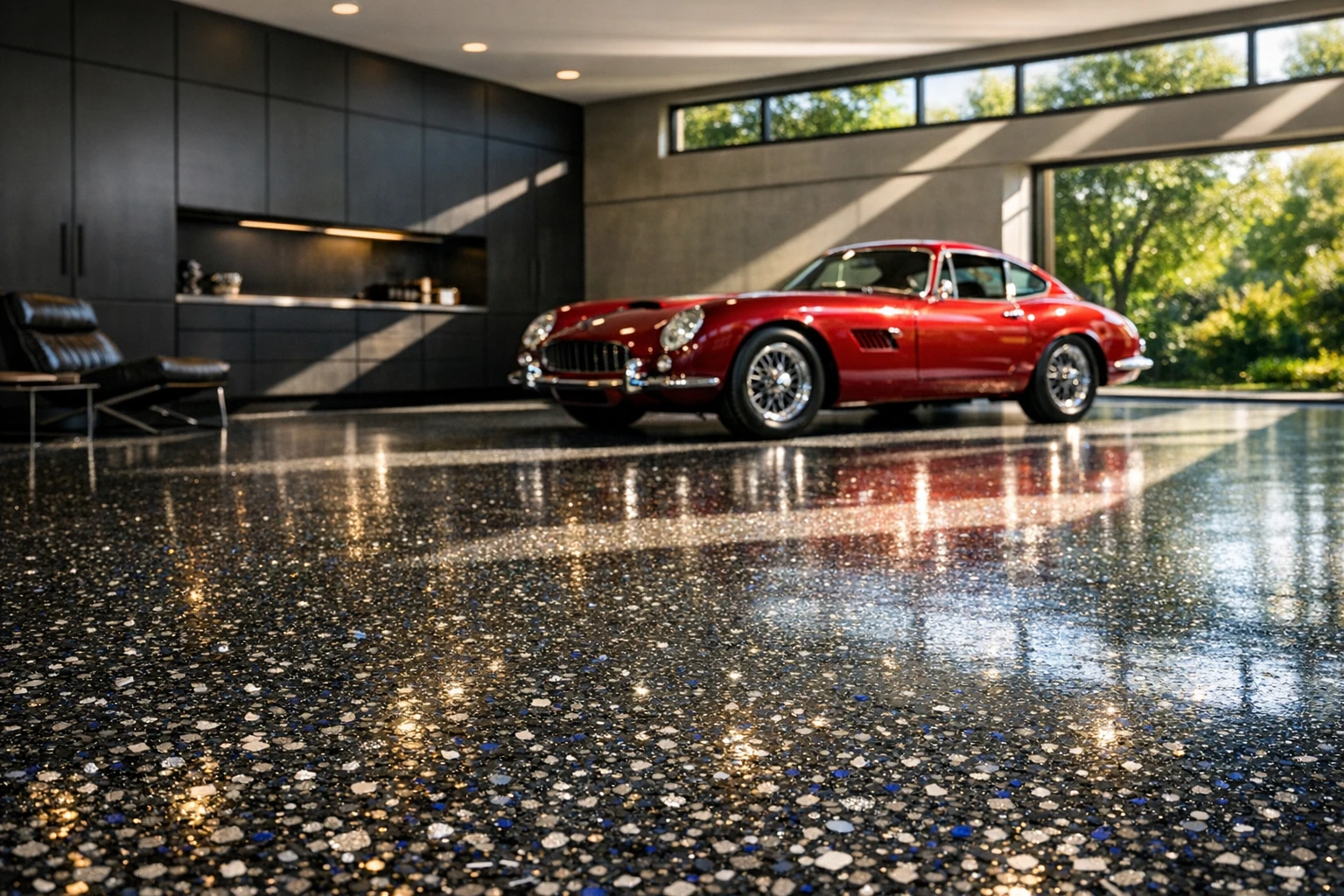
Decorative flake systems are among the most recognizable styles, especially in garages and utility areas. Colored vinyl flakes are broadcast into the wet coating, then sealed under a clear topcoat. The result adds texture, visual depth, and some camouflage for dust or small marks. For homeowners, that balance of practicality and finish is often appealing. Quartz systems push the idea further, using colored quartz granules for extra slip resistance and durability, which makes them useful in locker rooms, wash areas, and spaces where secure footing matters.
Metallic epoxy sits on the more artistic end of the spectrum. Pigments are manipulated during installation to create movement, marbling, and reflective depth. A finished metallic floor can resemble polished stone, liquid metal, or a clouded mineral surface depending on the technique and lighting. It is popular in showrooms, hospitality spaces, upscale basements, and commercial interiors that want a memorable floor without grout lines or separate tiles. Because every installation responds a little differently, the final pattern is often unique rather than perfectly repeatable.
Finish choices affect function just as much as aesthetics. A glossy topcoat increases light reflectance and can make a room feel larger, but it may show scratches more readily and can be slippery if the floor becomes wet. Satin or matte finishes soften the visual effect and may better suit understated interiors. Installers can also incorporate additives for slip resistance, though that typically changes the feel underfoot and can slightly complicate cleaning. Useful design and performance options include:
- Solid-color systems for a neat, professional baseline
- Flake finishes for texture and easier visual maintenance
- Metallic effects for decorative impact
- Quartz broadcasts for traction and heavy wear areas
- Clear topcoats with UV or chemical resistance tailored to the setting
Good design with epoxy is not just about color charts. It is about matching the finish to lighting, traffic patterns, maintenance expectations, and the mood of the room. A sleek metallic floor may look stunning, but a lightly textured flake surface may serve a family garage better. A bright, reflective finish may cut the cave-like feeling of a warehouse, while a softer tone may help a residential basement feel warmer and more settled. The most successful floors are chosen with both the eye and the daily routine in mind.
Benefits, Trade-Offs, and a Practical Conclusion for Buyers
The benefits of epoxy flooring are real, but the best buying decisions come from understanding both strengths and limits. On the positive side, epoxy can create a seamless or nearly seamless surface that is easier to sweep and mop than rough concrete or heavily jointed flooring. It often resists oils, many chemicals, abrasion, and impact better than basic paint systems. Because it can brighten a space and reduce concrete dust, it also improves the everyday feel of garages, workrooms, and commercial interiors. In the right setting, a properly installed epoxy system can last for many years, with lifespan influenced by traffic, slab condition, coating thickness, and maintenance.
Maintenance is usually straightforward rather than dramatic. Dust mopping, soft-bristle sweeping, and prompt cleanup of spills handle most routine care. Neutral cleaners are commonly recommended, while harsh cleaning methods may dull some finishes over time. In busy facilities, adding entrance mats and protecting the floor from metal gouges can extend service life. Compared with replacing worn tile or maintaining damaged bare concrete, that simplicity is part of epoxy’s appeal.
Still, epoxy is not magic. Poor surface preparation can lead to peeling, bubbling, or premature wear. Some epoxy products may yellow with prolonged UV exposure, which is why sunlit areas sometimes benefit from a more UV-stable topcoat. Wet floors can become slippery without a texture additive. Installation conditions matter too: temperature, humidity, and moisture in the slab can all affect curing and adhesion. Return-to-service times vary by product, but owners should expect a waiting period before foot traffic, and longer before vehicle use or full chemical exposure.
Cost also deserves a realistic view. A bargain coating may look attractive on day one yet underperform if the slab is damp, cracked, contaminated, or poorly profiled. Pricing usually reflects preparation work, material type, floor condition, thickness, decorative options, and labor skill. That is why estimates can differ so sharply. When comparing bids, buyers should ask about moisture testing, crack repair, number of coats, topcoat type, slip resistance, and warranty terms rather than focusing only on the headline number.
For homeowners, facility teams, and business owners, the value of Epoxy Resin Flooring: Common Uses, Styles & Benefits comes down to fit. If you need a floor that looks cleaner, works harder, and simplifies upkeep, epoxy can be an excellent option when specified honestly and installed well. If your slab has moisture issues, heavy UV exposure, or use conditions that demand another resin system, a good contractor should say so. The smartest conclusion is not that epoxy suits every floor, but that it is one of the most adaptable upgrades available when performance goals, design taste, and site conditions all point in the same direction.