Epoxy Resin Flooring: Common Uses, Styles & Benefits
Epoxy resin flooring has moved well beyond factories, showing up in garages, kitchens, clinics, studios, and retail spaces because it pairs strength with a sharp, seamless finish. That matters today because owners want surfaces that can handle spills, foot traffic, chemicals, and regular cleaning without turning every repair into a major project. At the same time, color flakes, metallic effects, and matte or glossy topcoats have made epoxy a design choice rather than a purely practical layer. This article maps out the main uses, style options, benefits, and planning points so readers can decide whether epoxy suits their space and budget.
Outline
- What epoxy resin flooring is and how the system works
- Where it is commonly used in homes, businesses, and industrial sites
- Popular styles, finishes, and decorative options
- Main benefits, performance strengths, and practical limitations
- Installation, maintenance, costs, and how to choose the right system
What Epoxy Resin Flooring Is and How It Works
Epoxy resin flooring is not a single paint-like product but a flooring system built from chemistry, preparation, and layered application. In simple terms, it usually combines a resin with a hardener. When those two parts are mixed, they begin a chemical reaction that creates a rigid, durable surface bonded to the prepared substrate below, most often concrete. That is why professionals often describe epoxy as a thermosetting material rather than a simple coating. Once cured, it does not behave like ordinary wall paint. It becomes more like a protective shell, fitted closely to the floor underneath.
The term covers several systems. A thin epoxy coating might be used in a residential garage for dust control and easier cleaning. A self-leveling system can smooth minor imperfections and create a more uniform appearance in commercial interiors. Heavier-duty mortar systems, often filled with sand or quartz, are used in industrial settings where impact resistance matters. Thickness varies widely, and that matters because performance changes with the build of the system. A decorative coating meant for occasional car traffic is different from the floor in a warehouse where pallet jacks move all day.
Most epoxy floors rely on a sequence of layers rather than one pass with a roller. A typical build may include:
- a mechanically prepared concrete slab
- a primer to improve adhesion
- a body coat that adds thickness and color
- decorative media such as flakes or quartz, if desired
- a clear topcoat for wear resistance, stain protection, or UV stability
Preparation is the quiet hero of the entire process. If the concrete is dusty, oily, weak, or damp, even a premium product can fail. Contractors often grind or shot-blast the slab to open the pores and remove contaminants. Moisture testing is also important because vapor pressure rising through concrete can cause bubbling, peeling, or delamination.
Compared with tile, epoxy has fewer joints and therefore fewer places for dirt or bacteria to hide. Compared with sheet vinyl, it can offer stronger chemical resistance and a harder-wearing finish. Compared with polished concrete, it gives more options for color and pattern, though polished concrete can feel more natural and may tolerate sunlight better. The key idea is simple: epoxy is not magic, but when it is matched to the right surface and use case, it can function like tailored armor for the floor.
Common Uses in Residential, Commercial, and Industrial Spaces
One reason epoxy resin flooring remains so relevant is its range. It is at home in spaces that look nothing alike but share one practical problem: the floor has to work hard. In residential settings, the garage is the classic example. Concrete garages stain easily, gather dust, and can look tired even when the rest of the house is updated. An epoxy system can create a sealed, easier-to-clean surface that stands up better to oil drips, tire traffic, and stored equipment. Basements, utility rooms, workshops, and home gyms also benefit because the flooring can help reduce dust and create a more finished appearance.
Inside commercial buildings, epoxy is often selected for its combination of hygiene, durability, and visual neatness. Retail stores use it for sleek, low-joint floors that are easy to mop and can be designed to fit branding. Clinics, laboratories, and some healthcare support areas value the seamless surface because it can support more controlled cleaning routines. Restaurants and food preparation areas sometimes use resin systems as well, though the exact formula must be chosen carefully for slip resistance, chemical exposure, and local compliance requirements. Schools, corridors, and public buildings may choose epoxy or related resin systems where traffic is heavy and maintenance budgets need predictable results.
Industrial spaces push the material in a different way. Factories, machine shops, warehouses, and logistics centers need floors that resist abrasion, dropped tools, rolling loads, and occasional chemical spills. In these environments, decorative flair matters less than build thickness, repairability, and traction. Some areas also need line markings, safety zones, or color-coded workspaces, and resin floors can support those operational details cleanly.
Common settings include:
- garages and workshops where stain resistance is useful
- retail units that benefit from a polished, modern finish
- healthcare and laboratory support spaces needing simple cleaning routines
- warehouses exposed to rolling traffic and impact
- showrooms where reflectivity and visual presentation matter
Still, epoxy is not the answer everywhere. Exterior areas with strong sunlight can cause some formulations to amber or chalk unless UV-stable topcoats are used. Buildings with ongoing slab moisture problems may need a vapor-control strategy first. Wooden subfloors that flex significantly are usually poor candidates for rigid systems. In other words, the best use of epoxy starts with a clear look at the room, the traffic, and the risks. Put it in the right place, and it can feel quietly brilliant. Put it in the wrong one, and the floor will remind you of that decision for years.
Styles, Colors, and Finish Options
For many people, the surprise with epoxy resin flooring is not its toughness but its range of visual styles. The old stereotype is a plain gray industrial slab, useful but forgettable. Modern systems can be understated, bold, glossy, textured, stone-like, or almost theatrical. In the right light, some floors look like polished water, while others resemble terrazzo, granite, or finely speckled concrete. That flexibility is one reason epoxy now appears in design conversations that once focused mainly on tile, wood-look materials, or polished concrete.
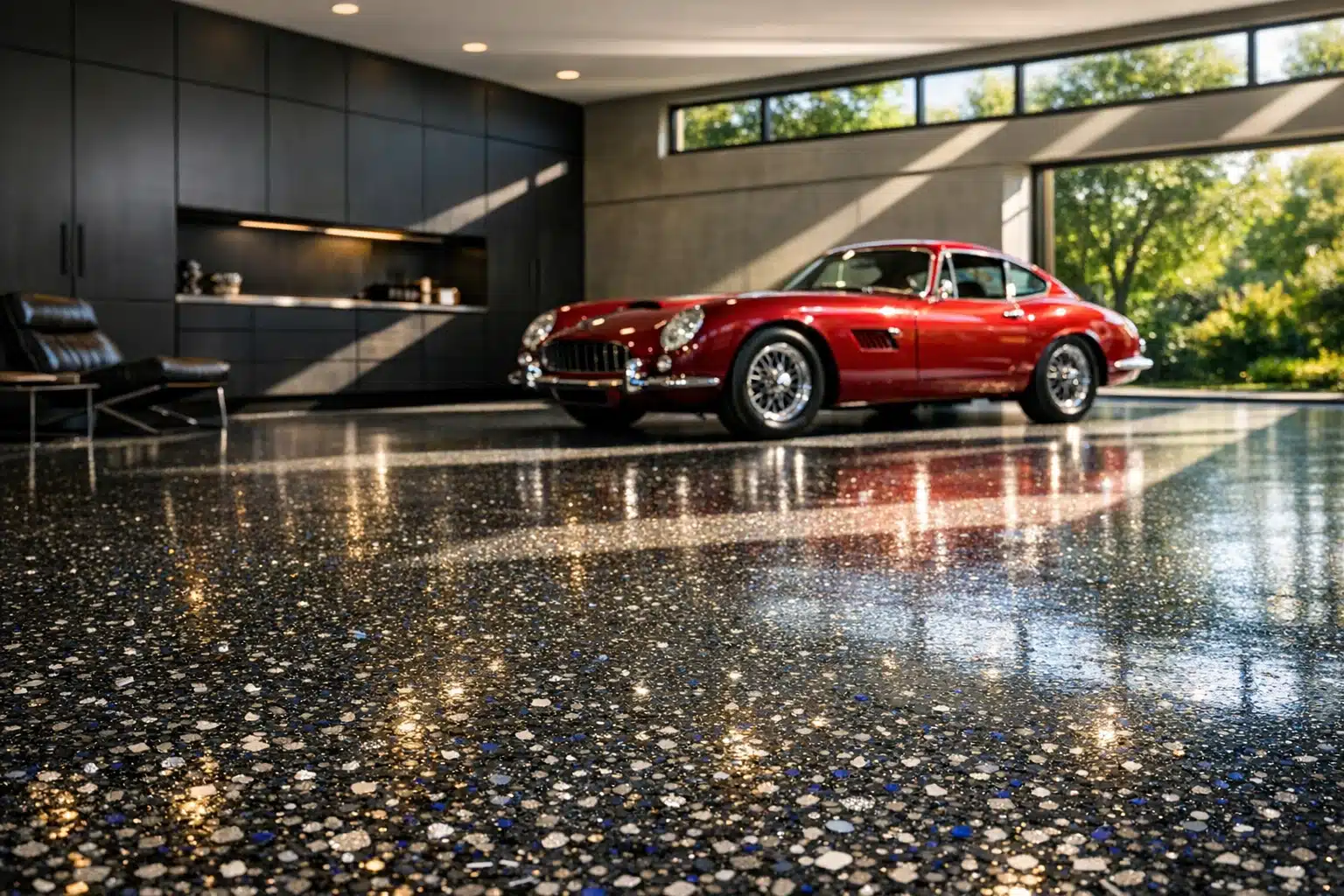
Solid-color epoxy remains a popular choice because it is clean, practical, and easy to coordinate with walls, shelving, or equipment. Neutral grays, beige tones, white, and charcoal are common in garages, service corridors, and commercial units. Decorative flake systems add depth by scattering vinyl chips into the coating, which helps disguise dust, minor imperfections, and everyday wear. This style is especially popular in garages and utility spaces because it looks tidier between cleanings and feels less clinical than a flat solid color.
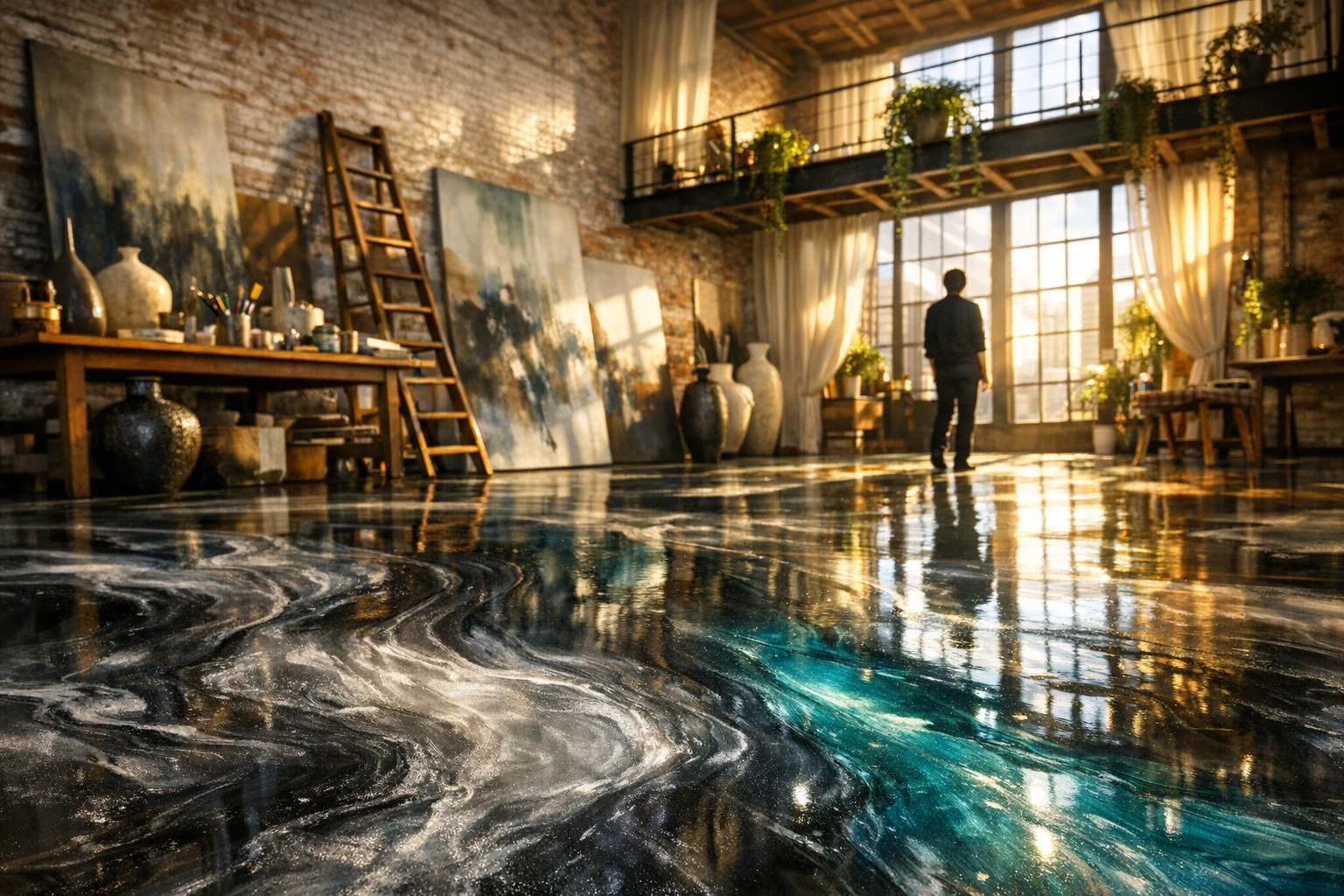
Metallic epoxy is the dramatic option. Pigments swirl through the resin and produce movement, contrast, and a reflective, almost liquid appearance. It is often used in boutiques, salons, reception areas, and feature rooms where design is meant to do more than sit quietly in the background. Quartz-filled systems, by contrast, prioritize texture and durability while still offering decorative value. They are common in locker rooms, schools, and commercial settings where slip resistance matters alongside appearance.
Finish selection also changes the mood of a room. Common choices include:
- high gloss for brightness and visual impact
- satin or matte for a softer, more restrained look
- textured finishes for additional grip
- clear topcoats with UV resistance where sunlight is a concern
- custom colors or zoning for branding and wayfinding
Design is not just about color; it is about how the floor behaves in the space. Glossy surfaces reflect light and can make a room appear larger and cleaner, which is useful in showrooms and garages. Matte finishes reduce glare and may feel more relaxed in studios or living spaces. Dark colors can look elegant but may reveal dust more quickly, while heavily patterned finishes hide small marks better over time.
The smartest style choice usually balances appearance with routine use. A stunning metallic floor in a low-traffic reception area may be perfect. The same floor in a busy mechanical room may not be the most sensible move. Good epoxy design works like good tailoring: it looks sharp because it fits the real life of the room, not because it ignores it.
Benefits, Performance Strengths, and the Trade-Offs to Understand
Epoxy resin flooring earns attention because it offers a combination that many materials struggle to deliver at once: durability, easy maintenance, visual flexibility, and strong chemical resistance in the right formulation. A seamless floor has obvious practical value. With no grout lines and very few joints across large areas, routine cleaning can be simpler than with many tiled surfaces. Dust tends to sit on the surface rather than working into cracks, and spills are generally easier to spot and remove. In garages and workshops, that can mean less scrubbing. In commercial interiors, it can mean faster cleaning cycles and a neater appearance during business hours.
Another major benefit is wear resistance. Properly specified epoxy systems can tolerate heavy foot traffic, rolling loads, and contact with oils, cleaners, and various chemicals better than untreated concrete. They also seal the slab, which can reduce concrete dusting. In practical terms, this makes the environment cleaner and can help protect stored goods, equipment, and nearby finishes. Light reflectivity is another quiet advantage. Gloss systems can brighten dim rooms by bouncing available light back into the space, which can be useful in garages, workshops, and some retail settings.
That said, epoxy should be chosen with open eyes, not rose-colored ones. Its biggest strength can also reveal its biggest weakness: it is unforgiving of poor preparation. If the slab is contaminated or moisture is ignored, the coating may peel, blister, or wear unevenly. Surface cracks in the concrete can telegraph through the finish later, especially if the slab continues to move. Some formulations can become slippery when wet unless anti-slip aggregates are added. Others may amber over time in sunlight, particularly if they are not protected with a more UV-stable topcoat.
Important trade-offs include:
- installation quality matters as much as product quality
- downtime is required while the system cures
- slip resistance may need to be engineered into the finish
- UV exposure can affect color stability in some systems
- repairs may be visible if the original finish had strong decorative effects
Cost sits in the middle of the conversation. Epoxy is usually more expensive than simply painting concrete, but often more durable and more professional-looking. Compared with high-end tile or specialty stone, it can be competitive, especially in large open spaces. Lifespan varies widely depending on traffic, slab condition, chemistry, and maintenance. In low-to-moderate residential use, a well-installed floor can perform for many years. In industrial settings, service life depends heavily on abuse levels and whether the system was designed for that exact environment.
The balanced view is the useful one. Epoxy resin flooring is not indestructible, and it is not ideal for every room. Yet when the substrate is sound and the specification matches the job, it offers a rare blend of clean lines, serious durability, and design freedom.
Installation, Maintenance, Costs, and a Practical Conclusion for Buyers
Choosing epoxy resin flooring becomes much easier once the process is understood from start to finish. Installation usually begins with inspection, not mixing. A contractor will assess the concrete for moisture, cracks, contamination, previous coatings, and flatness. That step matters because the floor system must respond to the slab it is covering. Mechanical preparation usually follows, often through diamond grinding or shot blasting, to create a clean and textured surface for adhesion. Cracks and holes may be repaired before primer is applied. After that come the body coats, decorative media if selected, and the final topcoat. Cure times vary by product and site conditions, but the floor generally needs controlled downtime before foot traffic and longer before heavier use.
Maintenance is one of epoxy’s selling points, but “low maintenance” does not mean “no maintenance.” Grit should be swept or vacuumed regularly because abrasive dirt can dull even a tough finish over time. Spills, especially oils or chemicals, should be cleaned promptly. Harsh scrubbing pads or aggressive cleaners can shorten the cosmetic life of the top layer, so manufacturers’ care guidelines matter. In commercial and industrial settings, maintenance plans often work best when they include scheduled cleaning and periodic inspection of high-wear lanes, thresholds, and turning points.
Cost is influenced by far more than square footage. Major pricing drivers include:
- condition of the existing concrete and repair needs
- thickness of the system
- number of coats and type of topcoat
- decorative elements such as flakes, metallic pigments, or quartz
- site complexity, access, and required downtime
That is why two floors of the same size can come with very different estimates. A simple garage coating on sound concrete is one thing. A moisture-prone commercial floor with crack repair, cove details, and slip-resistant texture is another. Buyers should ask not only what the system costs, but what is included: preparation method, moisture mitigation if needed, warranty terms, expected cure schedule, and recommended maintenance.
For homeowners, the best epoxy floor is usually the one that solves a real problem, such as dust, stains, or an unfinished-looking garage, without introducing a finish that is too delicate or too flashy for daily life. For business owners and facility managers, the best choice is typically the one that supports operations, cleaning routines, safety, and long-term value rather than just first impressions. If the slab is healthy, the installer is skilled, and the finish fits the space, epoxy resin flooring can be one of those rare upgrades that looks smart on day one and still feels sensible years later. That is the real appeal: not hype, but dependable performance dressed in a cleaner, better-looking surface.