Epoxy Resin Floors
Few building finishes are judged as quickly as a floor. The moment you enter a garage, showroom, clinic, or warehouse, the surface quietly announces whether the place is practical, neglected, elegant, or built for hard work. Epoxy Resin Flooring matters because it combines protection with appearance, forming a sealed layer that can handle stress while transforming the mood of a room. Knowing how it performs, where it excels, and what it demands in preparation helps owners make better long-term decisions.
Outline: This article begins with the basics of epoxy systems and how they bond to concrete. It then explores the main benefits, practical uses, and performance factors that influence real-world results. Next comes the installation process, followed by design choices and a comparison with other flooring options. The final section brings cost, maintenance, and buyer guidance together in a conclusion aimed at homeowners, facility managers, and business owners.
1. What Epoxy Resin Flooring Is and Why the System Matters
At first glance, epoxy resin flooring can look simple: a smooth, sealed coating spread over concrete. In reality, it is a system, not a single paint-like product. Standard epoxy is created when resin and hardener are mixed, triggering a chemical reaction that forms a rigid, durable surface. When properly installed, that surface bonds tightly to prepared concrete and creates a floor that is dense, protective, and visually refined.
This distinction matters because many people confuse true epoxy systems with basic floor paint. Paint mostly dries by solvent or water evaporation, while epoxy cures through a chemical process. That difference affects strength, adhesion, chemical resistance, and lifespan. In garages, workshops, laboratories, and commercial interiors, performance depends less on the shine and more on what lies beneath it: the slab condition, moisture level, primer choice, coating thickness, and topcoat type.
There are several common system categories: • Thin-film coatings, often used in light-duty residential areas • Self-leveling epoxy, which creates a smoother and thicker surface • Mortar systems, designed for heavy industrial traffic • Decorative flake or quartz systems, which add texture and visual depth • Epoxy paired with polyurethane or polyaspartic topcoats for UV and abrasion resistance
Concrete preparation is often the hidden hero of success. Mechanical grinding or shot blasting opens the concrete pores so the coating can anchor properly. If installers skip this step or apply epoxy over dust, oil, or moisture problems, failure can appear as peeling, bubbling, or hot-tire pickup. That is why the best-looking floor on day one is not always the best-performing floor a year later.
Well-made Epoxy Resin Floors are popular because they occupy a useful middle ground between decorative finish and industrial surface. They can be sleek enough for a showroom and rugged enough for demanding work zones. Imagine a plain concrete slab as a rough draft; epoxy is the edit that adds structure, clarity, and presence. Still, its success relies on matching the system to the site rather than buying a generic bucket and hoping for a dramatic transformation.
2. Core Benefits, Performance Strengths, and Ideal Use Cases
The appeal of epoxy resin flooring is easy to understand once you look beyond the gloss. A properly specified system can improve wear resistance, simplify cleaning, brighten interiors, and protect concrete from stains and surface erosion. This combination makes it relevant in both residential and commercial settings. A homeowner may want a cleaner garage that resists oil drips, while a business may need a floor that stands up to foot traffic, pallet movement, or frequent sanitation.
One major advantage is durability. Epoxy coatings are known for strong adhesion and compressive strength when applied over a suitable slab. In many environments, they handle dropped tools, rolling loads, and repeated cleaning better than bare concrete. They also reduce dusting, which is especially useful in workshops, storage spaces, and light manufacturing areas. Instead of concrete slowly shedding fine particles, the floor becomes sealed and more manageable.
Another benefit is chemical and stain resistance, although the exact level varies by formula. In garages and service areas, spills from oil, coolant, cleaners, or household chemicals are easier to wipe away from epoxy than from unsealed concrete. In retail or hospitality spaces, the seamless nature of the floor means there are no grout lines trapping dirt. The result is often a cleaner appearance with less effort.
Typical strengths include: • Easier sweeping and mopping because the surface is non-porous • Better light reflectivity in glossy finishes, which can brighten work areas • Decorative flexibility through color, flakes, metallic pigments, or quartz • Improved resistance to abrasion compared with untreated concrete • Optional slip-resistant texture through aggregates added to the top layer
That said, epoxy is not perfect everywhere. Some formulas can yellow under strong ultraviolet exposure, which is why exterior applications usually need other chemistries or specialized topcoats. Extremely damp slabs can also cause adhesion issues if moisture is not tested and addressed first. In very cold spaces, cure times may slow down, and the project schedule may stretch.
Even with these caveats, Epoxy Resin Floors remain a practical choice for garages, basements, showrooms, clinics, kitchens, schools, warehouses, and commercial back-of-house areas. Their real value comes from balance: they are not merely decorative, and they are not only industrial. They sit in the productive space between the two, where appearance supports function and function protects the investment.
3. Installation Process, Curing Stages, and Common Mistakes to Avoid
Installing epoxy resin flooring is one of those tasks that seems straightforward until the details begin to matter. A smooth result is built through preparation, environmental control, timing, and product compatibility. The process usually starts with inspection. Installers examine the slab for cracks, contamination, previous coatings, weak surface laitance, and moisture issues. Moisture testing is especially important because vapor transmission can push against the bond and cause blistering or delamination later.
After inspection comes surface preparation, which is arguably the most critical step. Professional installers typically use grinding or shot blasting rather than simple acid etching. Mechanical preparation removes weak material, opens pores, and creates a profile that lets primer and epoxy anchor effectively. Cracks and joints may be repaired depending on whether the goal is a seamless decorative finish or a more utilitarian industrial surface.
A common installation sequence looks like this: • Inspect the slab and test for moisture • Clean thoroughly and remove oils, grease, and debris • Grind or blast the surface to create the right profile • Apply primer to support adhesion and reduce outgassing • Install the body coat or self-leveling layer • Broadcast decorative flakes or quartz if required • Scrape and vacuum excess aggregate • Finish with a protective topcoat for wear, stain, or UV resistance
Curing matters as much as application. Some systems may be walkable in roughly 12 to 24 hours, accept light use in a day or two, and reach fuller chemical resistance after several days. Temperature and humidity influence these timelines. If a space is returned to service too soon, tire marks, dents, or adhesion problems can follow. The floor might look ready before it is truly ready.
The most common mistakes are surprisingly ordinary: poor prep, ignoring slab moisture, mixing ratios incorrectly, exceeding pot life, applying product too thinly, or choosing the wrong system for the environment. DIY kits can work in light residential settings, but they often fail when expectations are industrial and preparation is minimal. A floor that peels is rarely the fault of chemistry alone; it is usually a story of skipped steps.
There is a quiet lesson in all this. Epoxy rewards patience. The dramatic reveal happens at the end, but the performance is decided earlier, when dust is removed, cracks are addressed, and every coat is given the right conditions to cure with discipline rather than haste.
4. Design Options and How Epoxy Compares With Other Flooring Choices
For many people, epoxy resin flooring begins as a practical decision and ends as a design feature. That shift is one reason the material has expanded far beyond factories and storage rooms. Modern systems can be crisp and understated, richly textured, or intentionally dramatic. A garage can look more like a curated studio. A retail space can feel brighter and more contemporary. A clinic can project cleanliness without relying on dull, utilitarian surfaces.
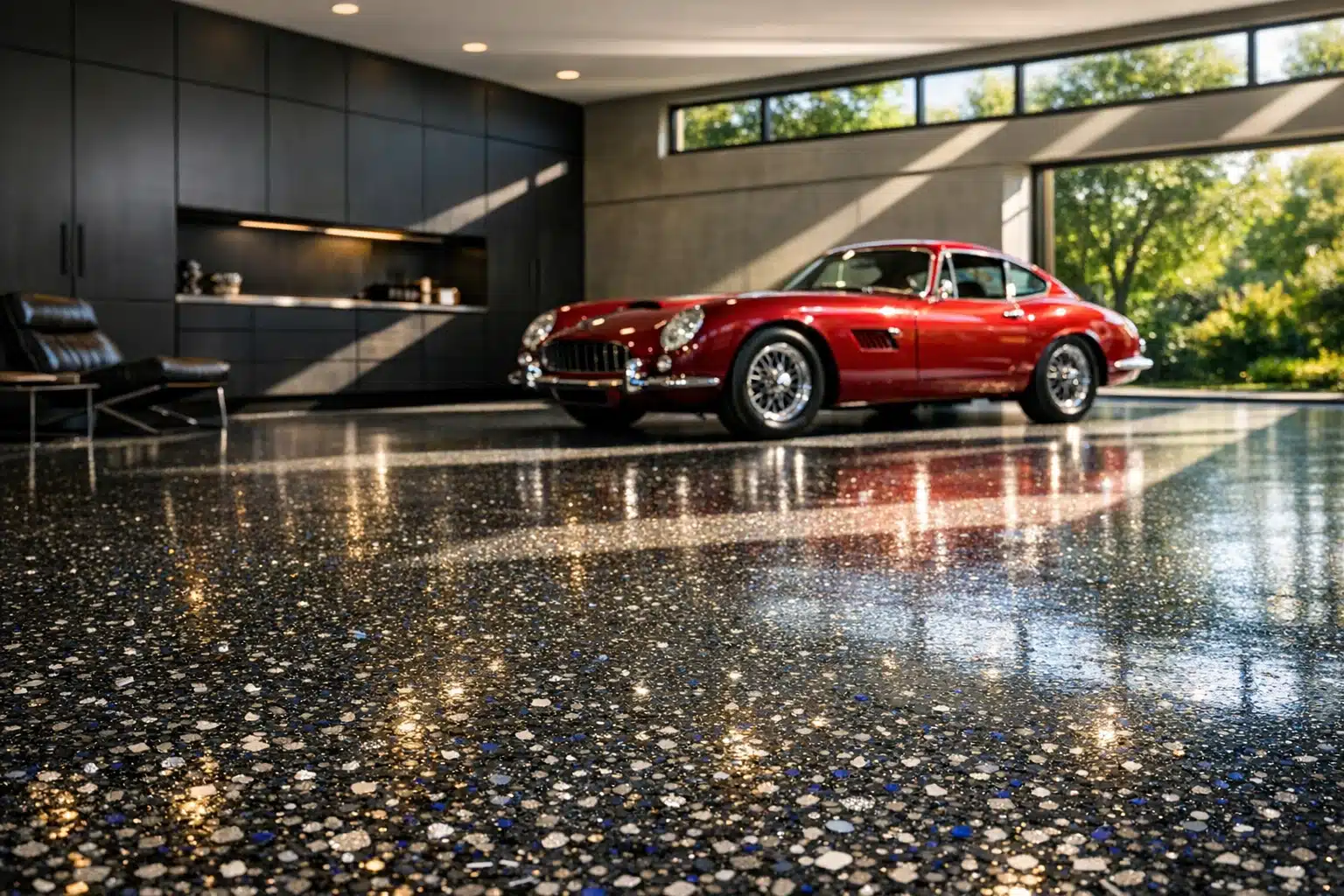
Popular design routes include solid colors, decorative vinyl flakes, colored quartz, and metallic finishes. Solid-color floors are clean and efficient, especially in service areas where clarity matters. Flake systems add variation and help disguise dust, minor imperfections, and everyday debris. Quartz systems offer strong slip resistance and are often chosen for locker rooms, commercial kitchens, and wet areas. Metallic epoxy, meanwhile, creates movement and depth that can resemble stone, smoke, or liquid metal, making it a favorite in showrooms and high-impact interior spaces.
When comparing epoxy with other flooring types, context is everything. Polished concrete keeps an industrial feel and can be very durable, but it does not create the same sealed barrier as epoxy. Tile offers wide design variety, yet grout lines increase cleaning demands and can become maintenance points. Vinyl systems can be comfortable underfoot and fast to install, though they may not offer the same hardness or chemical resistance. Polyurethane and polyaspartic coatings are often compared with epoxy because they can cure faster and may perform better under UV exposure, but they also behave differently during installation and cost planning.
Useful comparison points include: • Epoxy versus polished concrete: more coating protection versus a more natural slab appearance • Epoxy versus tile: seamless finish versus segmented surface with grout • Epoxy versus vinyl: harder industrial character versus softer feel underfoot • Epoxy versus polyaspartic: generally slower cure versus faster return to service • Epoxy versus bare concrete: major gains in cleanability, stain resistance, and visual finish
Epoxy Resin Floors stand out because they adapt to both style and workload. They can whisper in a muted gray workshop or make a bold statement in a commercial interior. That flexibility is rare. While no flooring is universally superior, epoxy often wins when users want a combination of visual order, protective performance, and custom finish options in one integrated system.
5. Conclusion: Cost, Maintenance, and Who Should Choose This Flooring
Choosing epoxy resin flooring usually comes down to three practical questions: What will the floor endure, how much upkeep is acceptable, and what kind of finish fits the space? Costs vary widely based on slab condition, surface preparation, thickness, decorative features, and topcoat selection. A straightforward residential garage coating costs far less than a heavy-duty industrial system with moisture mitigation, crack repair, and broadcast aggregate. Because preparation drives performance, the lowest quote is not always the lowest long-term cost.
Maintenance is one of epoxy’s strongest selling points. Day-to-day care is usually simple: dry dust removal, damp mopping, and prompt cleanup of spills. In busier facilities, scheduled cleaning with manufacturer-approved products helps preserve appearance and traction. Abrasive debris should not be left to grind into the topcoat, and harsh chemicals should only be used if the system is designed for them. Over time, some floors may benefit from a refreshed topcoat instead of full replacement, which can extend service life and control expenses.
For buyers trying to decide, this rule is useful: match the floor to the use, not to the trend. A home gym may need comfort and slip resistance. A car workshop may prioritize chemical tolerance and impact performance. A retail showroom may care more about aesthetics, reflectivity, and brand presentation. A food-service or healthcare environment may focus on hygiene, seamlessness, and washability. Good specification is not glamorous, but it saves money and frustration.
Epoxy Resin Floors make the most sense for people who want a surface that looks intentional and works hard without constant attention. Homeowners with garages, basements, or utility spaces can gain a cleaner and more finished environment. Business owners can improve presentation while protecting the slab beneath daily traffic. Facility managers can benefit from easier maintenance planning and a system tailored to operational needs.
In the end, epoxy is less about shine than about control. It gives you more control over cleanliness, durability, appearance, and long-term wear. If you value that mix of order and resilience, epoxy resin flooring deserves serious consideration before the next renovation, fit-out, or concrete upgrade begins.