Metal Carports: Guide
Choosing the right carport can save a vehicle from relentless sun, heavy rain, drifting snow, and the slow wear that comes from year-round exposure. This article breaks down how metal carports are built, why their strength matters, and which options suit different homes, climates, and budgets. You will also learn what affects cost, installation, maintenance, and local code approval before you buy. If you want practical protection without the expense of a full garage, this guide will give you a clear place to start.
Outline
- What metal carports are and why they remain a practical alternative to full garages
- How frame materials, roof styles, and design choices affect performance and durability
- What to consider when sizing, placing, and installing a carport on your property
- How costs, maintenance, and long-term value compare across common options
- How homeowners, RV owners, and small property managers can choose the right setup
Understanding Metal Carports and Their Real-World Benefits
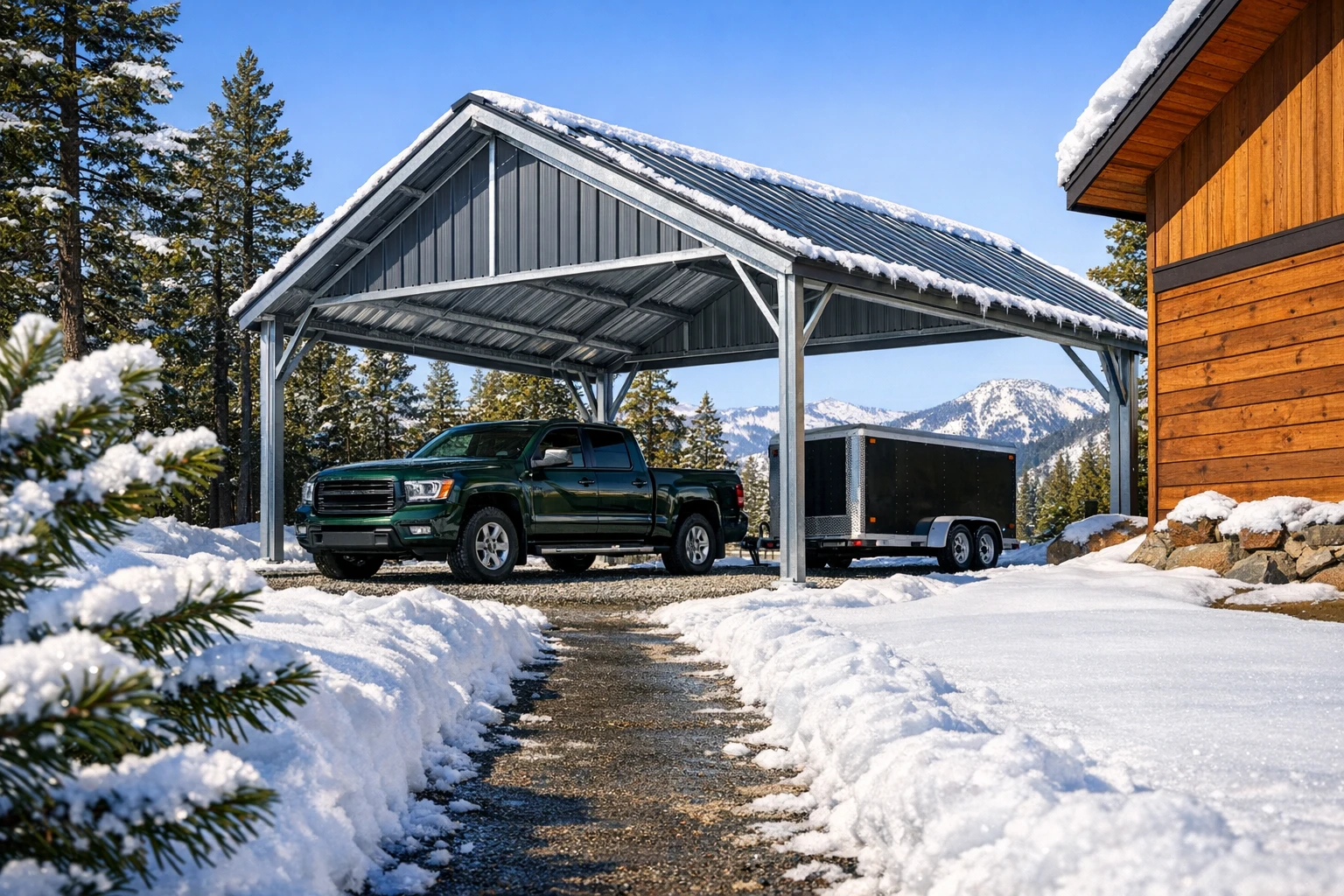
Any practical Metal Carports: Guide should begin with a simple question: what problem is a carport solving? For most buyers, the answer is not just parking. It is protection. A vehicle that sits outdoors faces ultraviolet exposure, tree sap, bird droppings, hail, standing snow, and repeated moisture cycles that can wear paint, trim, seals, and interior surfaces over time. A metal carport offers overhead cover with a relatively open structure, which means it can shield a car, truck, boat, tractor, or trailer without the full cost and construction timeline of an enclosed garage.
The appeal lies in that balance between simplicity and usefulness. Metal carports are usually built from galvanized steel or steel with protective coatings designed to resist corrosion. Compared with wood structures, they typically require less routine upkeep because they do not need frequent painting, are not vulnerable to termites in the same way, and are less likely to warp after a season of moisture and heat. Compared with temporary fabric shelters, a properly installed metal carport often provides better structural stability and longer service life, especially in regions with strong winds or snow accumulation.
That does not mean every metal carport is identical. Performance depends on engineering, frame gauge, anchoring, roof design, and site conditions. A light-duty unit meant for seasonal shade is very different from a certified structure rated for snow loads or high wind zones. Buyers sometimes focus only on width and price, yet those two details tell only part of the story. A narrow, low-cost structure can look appealing at first glance, but it may not fit a tall pickup, allow comfortable door clearance, or hold up well in a demanding climate.
In everyday use, the practical benefits are easy to picture:
- Less frost and snow removal on winter mornings
- Reduced cabin heat buildup during hot weather
- Protection for recreational vehicles or equipment that does not fit in a garage
- A flexible covered area that can also serve as storage or a work zone
There is also a property-use advantage. On many lots, a carport can be added more easily than a garage because it is lighter, faster to install, and often requires fewer materials. For homeowners who want to preserve access, airflow, and visibility, that openness can be a feature rather than a compromise. A well-chosen carport does not try to be something else; it fills the gap between full exposure and full enclosure with steady, practical efficiency.
Materials, Roof Styles, and Design Features That Shape Performance
Once the basic purpose is clear, the next step is understanding why one metal carport behaves differently from another. The material itself is only the starting point. Most modern units are steel-based, often using galvanized or galvalume-coated components to reduce rust risk. Aluminum exists in some markets, but steel remains the more common choice for buyers who want higher strength and broad availability. Even within steel carports, thickness matters. Manufacturers frequently describe framing by gauge, and lower gauge numbers generally indicate thicker steel. A 12-gauge frame is usually heavier-duty than a 14-gauge frame, though buyers should still read the actual specifications rather than relying only on shorthand labels.
Roof style is another major factor. Three common options appear again and again: regular, boxed eave, and vertical roof designs. A regular roof is often the most economical, but its curved shape can be less effective in areas with heavy snow or where debris slides poorly. A boxed eave or A-frame roof gives a more residential look and can improve water runoff. A vertical roof usually offers the strongest drainage performance because the roof panels run from ridge to eave, helping rain, leaves, and snow move off the structure more efficiently. In demanding climates, that detail can make a noticeable difference.
Design features also affect daily convenience. Buyers should think beyond the frame and ask how they will actually use the structure. Useful options may include:
- Extra height for lifted trucks, vans, or RVs
- Extended length for boat trailers or equipment
- Partial side panels for wind and sun control
- Gable ends for improved weather blocking
- Fully enclosed sides when more security is needed
The anchoring system deserves special attention. A sturdy frame can still perform poorly if it is not matched to the surface below it. Anchors vary for gravel, asphalt, concrete, or soil, and local wind conditions may require specific installation methods. This is why engineering certifications matter. In some areas, buyers need a carport rated for particular wind speeds or snow loads, and those ratings should come from the manufacturer or engineered plans rather than guesswork.
There is also an aesthetic dimension, even if buyers rarely say it first. A clean-lined metal carport can look surprisingly neat when the roof pitch, trim color, and proportions align with the house. It can feel less like an afterthought and more like a useful extension of the property. Good design is not decoration alone; it is the quiet moment when function and appearance stop arguing and start working together.
Sizing, Site Preparation, and Installation Planning Before You Buy
At this stage, a Metal Carports: Guide becomes less about materials and more about planning. Many purchase regrets happen before installation day, usually because the structure was sized too tightly or the site was not prepared with enough care. A carport should fit more than the vehicle’s published dimensions. Buyers need room for mirrors, door swing, walking space, and clearance for loading, unloading, or moving around the vehicle in bad weather. A compact sedan and a full-size pickup do not occupy a driveway in the same way, and an RV brings an entirely different set of requirements for height and turning radius.
A common rule of thumb is to add comfortable clearance on all sides rather than aiming for the bare minimum. For a single vehicle, a 12-foot-wide carport is common, but wider options may feel far more practical if the vehicle is large or if the driver frequently handles tools, child seats, or cargo. Length matters just as much. A carport that barely covers the hood and roofline will offer less protection from angled rain or sun. Height should account for antennas, roof racks, raised suspensions, or future vehicle changes, not only current needs.
Site preparation affects both lifespan and performance. Ground that looks flat can still create headaches if drainage is poor. Water pooling around the base may contribute to erosion, muddy access, or anchor stress over time. Before ordering, buyers should inspect:
- Slope and runoff direction after heavy rain
- Soil firmness and the need for grading
- Whether a gravel pad or concrete slab would improve stability
- Access for delivery trucks and installation crews
- Overhead obstacles such as branches or utility lines
Permits and codes are another essential part of planning. In many municipalities, a carport may require zoning approval, setbacks from property lines, or engineering documents that verify wind and snow load capacity. Homeowners associations may also limit size, color, or placement. Skipping this step can turn a straightforward project into an expensive correction later.
Installation choices usually come down to DIY assembly or professional setup. A do-it-yourself kit can reduce labor costs for skilled owners with tools, time, and helpers. Professional installation often costs more upfront but can save frustration, improve alignment, and ensure the anchoring meets specifications. Picture the structure not as a simple kit in a box, but as a small building system that must cooperate with the land beneath it. When sizing and site planning are handled carefully, the finished result feels sensible from the first day instead of awkward for years.
Costs, Maintenance, Durability, and Long-Term Value
Price is often the doorway into the buying conversation, but total value is a better measure than sticker cost alone. In many U.S. markets, a basic single-car metal carport may start around the lower thousands before site work, certification upgrades, or extra panels are added. Larger units, heavier-gauge frames, vertical roofs, enclosed sides, taller legs, or engineered load ratings can raise the total significantly. Delivery fees, local permit costs, slab work, and installation labor can also shift the final budget more than first-time buyers expect.
The most useful way to think about cost is to separate it into categories. There is the structure itself, the site beneath it, and the performance requirements imposed by climate or local code. A very affordable carport may still become expensive if the buyer later discovers a need for a concrete pad, stronger anchors, or a redesign to meet setback rules. By contrast, a slightly higher initial spend can deliver better durability and fewer modifications down the road.
Maintenance is one reason metal carports remain attractive. They are not maintenance-free, but the routine is usually manageable. Owners should periodically inspect roof panels, fasteners, trim, anchors, and areas where standing debris traps moisture. Washing off leaves, pollen, or road dust helps preserve the finish, especially in coastal or humid regions. If scratches expose bare metal, prompt touch-up work can reduce the chance of rust spreading. These tasks are simple, but they matter because longevity usually comes from consistency rather than dramatic repairs.
Long-term value often appears in small savings rather than one dramatic financial event. A covered vehicle may hold paint condition better, suffer less interior fading, and require less seasonal cleaning. Equipment stored under cover may last longer because seats, rubber parts, and electrical surfaces are not constantly baked or soaked. In some cases, a well-installed carport can also improve the practicality of a property for future buyers, particularly where garages are limited.
Use this Metal Carports: Guide as a reminder that durability is not only about how thick the steel looks in a sales photo. It depends on the whole system:
- Appropriate frame strength for the climate
- Reliable roof design for drainage and debris shedding
- Correct anchoring for the chosen surface
- Regular inspection and basic upkeep
- Realistic expectations about exposure and use
When those elements line up, a metal carport becomes a steady, low-drama investment. It may never be the flashiest structure on a property, but usefulness has its own quiet style, and it tends to age well.
Final Thoughts for Homeowners, RV Owners, and Practical Buyers
The right carport depends less on trends and more on context. A homeowner protecting a daily driver in a suburban driveway has different needs than a rural buyer storing a tractor, or an RV owner trying to manage height, wind exposure, and access space. That is why the smartest purchase is rarely the cheapest unit or the largest one on a brochure. It is the structure that matches the vehicle, the climate, the site, and the way the space will actually be used every week.
For many readers, the decision becomes clearer when framed as a set of priorities. If weather is the main concern, focus on roof style, load ratings, and side protection. If convenience matters most, think about width, turning room, and how easily doors can open without awkward maneuvering. If the carport may later serve a second purpose, such as equipment storage or a shaded work area, choose dimensions that allow flexibility rather than a tight fit. This is where a little foresight pays off handsomely. A carport that works today but also fits tomorrow’s truck, trailer, or riding mower can save the cost of replacing it sooner than planned.
A sensible buyer checklist often looks like this:
- Measure current and future vehicles carefully
- Check local permits, setbacks, and HOA rules early
- Match frame strength and roof style to local weather
- Prepare a level, well-drained site before installation
- Compare the full project cost, not only the advertised base price
By now, Metal Carports: Guide should feel less like a product category and more like a practical planning tool. The goal is not to chase the biggest structure or the lowest quote. It is to make a calm, informed decision that protects vehicles, suits the property, and stays dependable over time. For homeowners who want straightforward shelter, for families juggling multiple cars, and for owners of boats, trailers, or RVs, a well-chosen metal carport can offer a strong middle ground between exposure and expensive enclosure.
In the end, the best result is usually simple: better protection, less hassle, and a structure that earns its space. If you compare specifications carefully, prepare the site properly, and buy with your climate in mind, a metal carport can become one of those quietly useful additions that improves daily life without demanding constant attention. That is a practical outcome most buyers can appreciate.