Epoxy Resin Flooring: Benefits, Styles and Common Uses
Outline and Why Epoxy Flooring Matters
A floor does more than support foot traffic; it shapes maintenance costs, safety, and the mood of a room long before furniture, stock, or machinery arrives. That is why epoxy resin flooring draws interest from homeowners, warehouse managers, retailers, and designers at the same time. It offers a rare mix of toughness, easy cleaning, and visual flexibility. Knowing what it can and cannot do helps you pick a surface that looks polished and performs when daily use gets demanding.
Epoxy flooring is not a trend built on glossy photos alone. It is a well-established resin system used in demanding environments where plain concrete may dust, stain, crack at the surface, or absorb oils and chemicals. When resin and hardener are combined, they create a cured surface that bonds to a prepared substrate and forms a dense, protective layer. Depending on the specification, that layer may be thin and decorative or thick enough to handle rolling loads, spills, and repeated cleaning.
To make the structure of this article easy to follow, here is the outline it will cover:
– what epoxy resin flooring is and how it functions
– the main benefits that make it popular in residential, commercial, and industrial spaces
– style options, color systems, and finish choices
– common uses, with examples drawn from real-world settings
– installation factors, upkeep needs, and decision points before purchase
The phrase Epoxy Resin Flooring: Benefits, Styles and Common Uses sums up the topic neatly because a successful flooring decision is never only about appearance. Buyers usually want three answers: will it last, will it suit the look of the space, and will it handle the way the room is actually used. Epoxy deserves attention because it can answer all three, but only when the right formula and installation method are chosen.
That last point matters. The words “epoxy floor” are often used broadly, yet not every system is identical. A garage coating, a decorative flake floor, an anti-slip warehouse system, and a self-leveling commercial finish may all belong to the epoxy family while performing quite differently. Surface preparation, substrate condition, humidity, cure time, and topcoat selection all influence the result. In other words, epoxy flooring is a category rather than a single product, and understanding that category is the key to getting value from it.
How Epoxy Resin Flooring Works and Why People Choose It
At its core, epoxy flooring is created by mixing resin with a hardener. Once combined, the material begins a chemical reaction that turns it from liquid to a rigid, durable surface. Installed properly, it bonds to concrete and creates a continuous finish that is easier to clean than many jointed alternatives. Most systems involve multiple layers, which may include a primer, body coat, decorative media such as flakes or quartz, and a protective topcoat. That layered build is one reason epoxy can be tailored to different budgets and performance targets.
One of the biggest advantages is durability. In garages, workshops, and warehouses, a finished slab has to deal with tire marks, dropped tools, abrasion, oils, and routine cleaning. Epoxy helps shield the underlying concrete from this daily grind. While lifespan varies with traffic, thickness, and maintenance, well-installed systems can perform for many years before major renewal is needed. Residential applications may last a decade or longer under moderate use, while heavy-duty industrial surfaces depend more strongly on load type and maintenance planning.
Another strong reason people choose epoxy is its seamless finish. Tile floors have grout lines that can trap dirt. Bare concrete can produce dust and absorb stains. Sheet goods may have seams that eventually show wear. Epoxy, by comparison, can create a smooth visual plane that feels orderly and intentional. In retail and commercial settings, that polished look can also improve light reflectivity, which may help spaces appear brighter.
Common benefits include:
– resistance to many household and commercial stains
– easier mopping and sweeping than porous concrete
– options for slip-resistant textures
– strong visual customization through color and aggregate choices
– lower long-term maintenance compared with some traditional surfaces
Still, realistic expectations matter. Epoxy is not indestructible. Poor surface preparation can cause peeling. Moisture vapor in concrete can create adhesion problems. Some epoxy systems may yellow under strong ultraviolet exposure unless protected with a suitable topcoat. It can also be slippery when very smooth and wet, which is why texture additives are often specified for ramps, kitchens, wash areas, and work zones. The smart way to compare flooring is not to ask which material is universally best, but which system matches the traffic, cleaning routine, moisture conditions, and visual goals of the project.
Styles, Finishes, and Design Flexibility
If durability is the practical side of epoxy, style is where the material becomes unexpectedly expressive. Many people still picture a plain gray workshop floor, yet modern resin systems can look subtle, architectural, bold, or almost theatrical depending on the finish. In discussions around Epoxy Resin Flooring: Benefits, Styles and Common Uses, this design range is one of the reasons the material continues to cross over from industrial sites into homes, offices, gyms, studios, and showrooms.
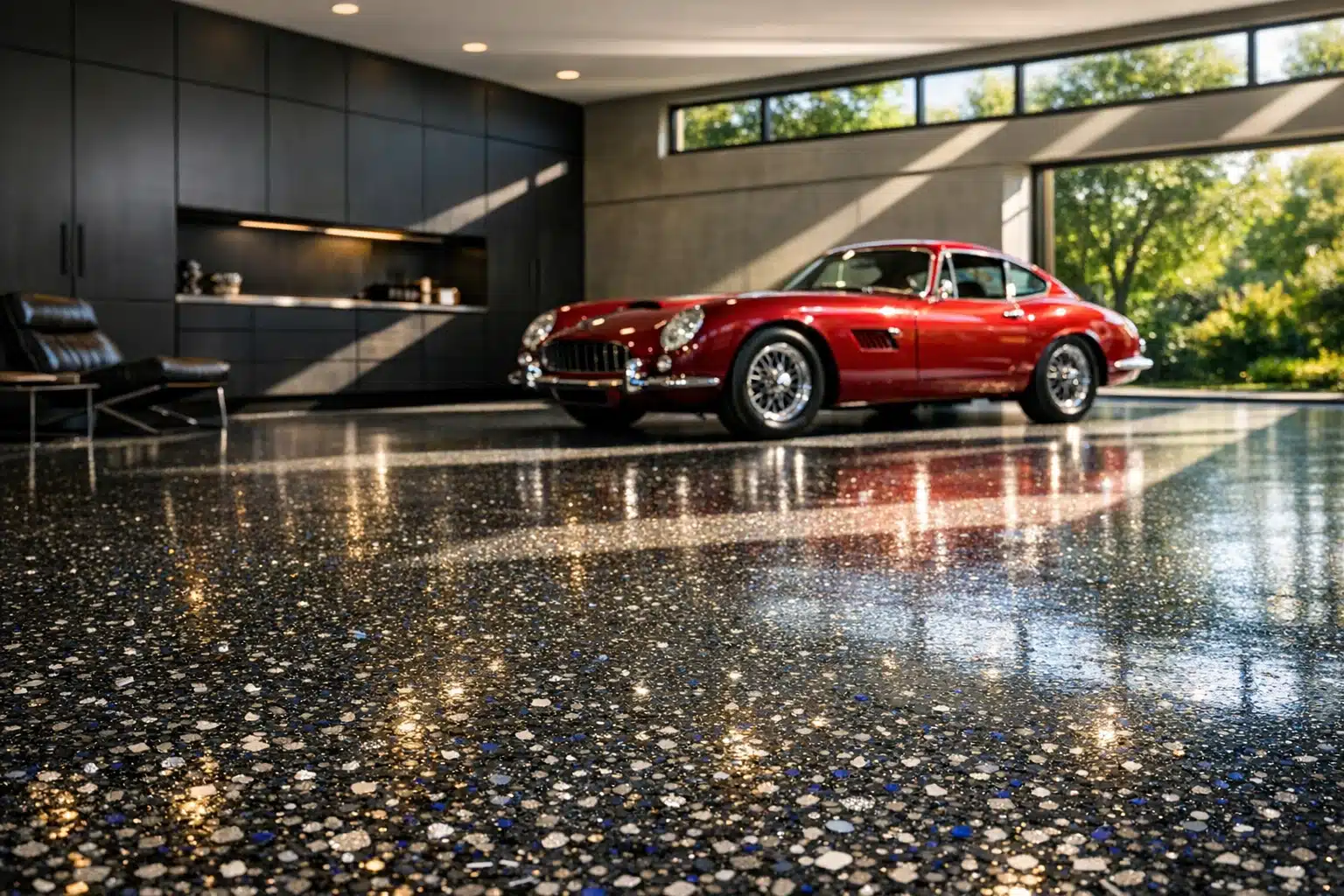
Solid-color epoxy is often the simplest and most budget-friendly option. It delivers a clean, uniform appearance that works well in garages, service corridors, storage areas, and minimalist interiors. For spaces that need more depth or visual movement, decorative flake systems are a popular next step. Vinyl flakes are broadcast into the wet coating and sealed under a clear topcoat, producing a speckled finish that hides dust and minor marks better than a flat single tone. This is one reason flake floors are frequently chosen for residential garages and utility spaces.
Metallic epoxy sits at the more dramatic end of the spectrum. With pigments moved through the resin during installation, the final surface can resemble stone, smoke, brushed metal, or liquid reflections. No two metallic floors look exactly alike, which appeals to homeowners and commercial clients wanting a signature visual effect. Because the finish is highly decorative, installers need strong technical skill to create a balanced result rather than a chaotic one.
Other widely used styles include:
– quartz-filled systems for added texture and toughness
– self-leveling epoxy for sleek, smooth commercial interiors
– anti-slip finishes for wet or safety-sensitive areas
– matte or satin topcoats for a softer, less reflective look
– high-gloss systems for brighter spaces and stronger visual impact
Design decisions should follow use, not just taste. A showroom may benefit from a glossy finish that reflects lighting and looks sharp under display vehicles or products. A food preparation area might prioritize texture, hygiene, and ease of wash-down over visual drama. A basement conversion may call for warmer colors and a satin topcoat to avoid an overly industrial feel. Think of epoxy flooring like a tailored jacket: the fabric, cut, and lining all matter, but the final choice depends on where it will be worn. The best-looking floor is the one whose style supports the way the space functions every day.
Common Uses in Homes, Commercial Buildings, and Industrial Facilities
Epoxy flooring earns its reputation because it can move across very different environments without losing its core strengths. In residential settings, garages remain one of the most common uses. A coated garage floor resists oil drips, road salt, muddy tires, and abrasion better than unfinished concrete, while also making the room feel less like a utility shell and more like an intentional extension of the home. Basements, laundry rooms, hobby spaces, and home gyms are also strong candidates, especially when owners want a surface that is easy to clean and visually consistent.
Commercial buildings use epoxy for a slightly different reason: presentation and performance often need to coexist. Retail stores, salons, cafés, clinics, and showrooms may choose epoxy because it creates a neat, seamless appearance and stands up to regular cleaning. In customer-facing areas, the floor quietly does a lot of work. It supports brand atmosphere, manages spills, and holds up under constant foot traffic. When decorative finishes are chosen well, the floor becomes part of the interior design rather than just a background surface.
In industrial environments, the logic becomes even clearer. Warehouses, manufacturing zones, laboratories, distribution centers, and service bays often demand resistance to abrasion, pallet traffic, impacts, and chemical exposure. Many systems are designed specifically for these conditions, with extra thickness, texture, or specialized topcoats added to match the risk profile of the site. A forklift route, for instance, places very different demands on a slab than a private workshop or a boutique entrance.
Common use cases include:
– garages and workshops that need stain resistance and easier cleanup
– retail stores that want a polished, low-joint floor
– healthcare and clean-service areas where easy sanitation matters
– warehouses that require durability under rolling loads
– food and beverage spaces that need coatings matched to wash-down routines
It is also worth noting where caution is needed. Outdoor exposure can challenge some epoxy systems because direct sunlight may cause discoloration unless a UV-stable topcoat is used. Very damp slabs can create installation issues if moisture testing is skipped. And highly impact-prone environments may require a different resin system, a thicker build, or a hybrid specification. The common thread is simple: epoxy works best when selected for the actual conditions of use, not just because the finish looked good in a brochure.
Choosing the Right System, Installation Basics, and Final Takeaways
By the time buyers compare samples, colors, and prices, the most important part of the project has usually become invisible: preparation. A good epoxy floor starts long before resin is poured. Concrete must be cleaned, repaired where necessary, and mechanically prepared so the coating can bond correctly. Installers often use grinding or shot blasting rather than simple acid washing, especially on professional-grade projects. Moisture testing is also critical because vapor moving through the slab can cause bubbling, peeling, or failure over time.
Cost depends on several factors, not just square footage. A thin decorative coating in a residential garage is very different from a multi-layer commercial or industrial system built for heavy traffic and chemical resistance. Pricing can rise with surface repairs, moisture mitigation, added texture, custom colors, coving, or premium topcoats such as polyurethane or polyaspartic finishes. That is why it helps to compare proposals based on system build and preparation scope, not just the headline number.
When reviewing options, ask practical questions:
– what substrate condition is the installer assuming
– how many coats are included and what thickness is expected
– how long is the cure time before foot traffic or vehicle use
– what cleaning products are recommended after installation
– which warranty terms apply, and what conditions can void them
Maintenance is usually straightforward. Dust and grit should be removed regularly because abrasive particles can dull the finish. Mild cleaners are normally preferred over harsh chemicals unless the installer recommends otherwise. Protective pads under heavy equipment, quick cleanup of spills, and occasional inspection of high-wear zones can extend the life of the surface. No floor is truly maintenance-free, but epoxy is often easier to manage than porous concrete or surfaces with many joints.
For homeowners, business operators, and facility managers, the value of Epoxy Resin Flooring: Benefits, Styles and Common Uses lies in balance. The right system can deliver durability, cleaner lines, easier upkeep, and a finish that suits the mood of the space rather than fighting it. If you want a garage that feels finished, a shop floor that looks tidy under pressure, or a work area that handles demanding routines with less fuss, epoxy is worth serious consideration. The best result comes from matching the resin system to the real conditions on site, choosing an experienced installer, and treating the floor as a long-term surface investment rather than a quick cosmetic upgrade.