Mini Farmhouses – Charming and Functional Small-Scale Homes
Small rural homes have moved from niche idea to practical aspiration for people who want land, calm, and lower upkeep. A well-designed mini farmhouse can support daily routines, storage, and style without demanding the budget or maintenance of a larger country house. This article explores how compact farmhouse living blends visual warmth with everyday usefulness, covering planning, materials, land, and long-term decisions. If you enjoy spaces that feel honest, efficient, and deeply livable, there is plenty here to discover.
Outline: This article begins with the renewed appeal of small-scale rural homes and the way Mini Farmhouses 4 reflects a broader shift toward efficient living. It then moves into layout strategy, showing how compact plans can feel open, practical, and visually calm. The third part examines building materials, energy choices, and realistic cost patterns, including the trade-offs between custom and prefab approaches. After that, the focus turns to land use, gardens, and the everyday lifestyle that often surrounds these homes. The final section offers a conclusion aimed at readers deciding whether a mini farmhouse fits their budget, habits, and long-term goals.
The Enduring Appeal of Compact Country Living
Mini farmhouses have become appealing for reasons that go well beyond aesthetics. Yes, they photograph beautifully, with board-and-batten siding, porches, wood beams, and windows that frame open land like paintings. Yet the real strength of these homes lies in how closely they match the way many people now want to live. Rising construction costs, growing interest in simpler routines, and a stronger focus on energy use have pushed many buyers and builders to rethink size. In that context, Mini Farmhouses – Charming and Functional Small-Scale Homes are not simply a design trend. They are a practical response to modern pressures.
Unlike a large farmhouse built for big households and heavy agricultural operations, a mini farmhouse is usually designed for one to four people and a more flexible lifestyle. Many fall in the range of roughly 400 to 1,200 square feet, depending on whether they are used as primary homes, guest houses, rental retreats, or backyard dwellings. This places them in a useful middle ground. They are usually larger and more comfortable than the smallest tiny homes, which often require major lifestyle compromises, but still much smaller than a typical suburban house. That difference matters. A compact home can reduce heating and cooling loads, lower cleaning time, and force sharper decisions about what really deserves space.
There is also an emotional reason people are drawn to them. Large houses often promise abundance, but small, well-composed homes can offer clarity. A porch becomes a real room rather than decoration. A kitchen island earns its footprint by working hard every day. A mudroom bench is not just pretty in photographs; it becomes the place where boots, seed packets, dog leashes, and grocery bags all come to rest. The home feels edited rather than crowded.
Several comparisons help explain why this model stands out: • Compared with urban apartments, mini farmhouses typically offer more privacy, outdoor access, and customization. • Compared with oversized rural homes, they usually require less maintenance, lower furnishing costs, and fewer underused rooms. • Compared with tiny houses on wheels, they often provide better insulation, more standard utilities, and easier long-term financing when built on a permanent foundation.
Another reason for their popularity is flexibility. A retired couple may want a compact one-level plan with generous natural light. A young family may use lofts, bunk rooms, and a deep porch to stretch limited square footage. An owner of a larger parcel may build one as a guest cabin, studio, or short-term rental. In each case, the small scale becomes an advantage rather than a compromise.
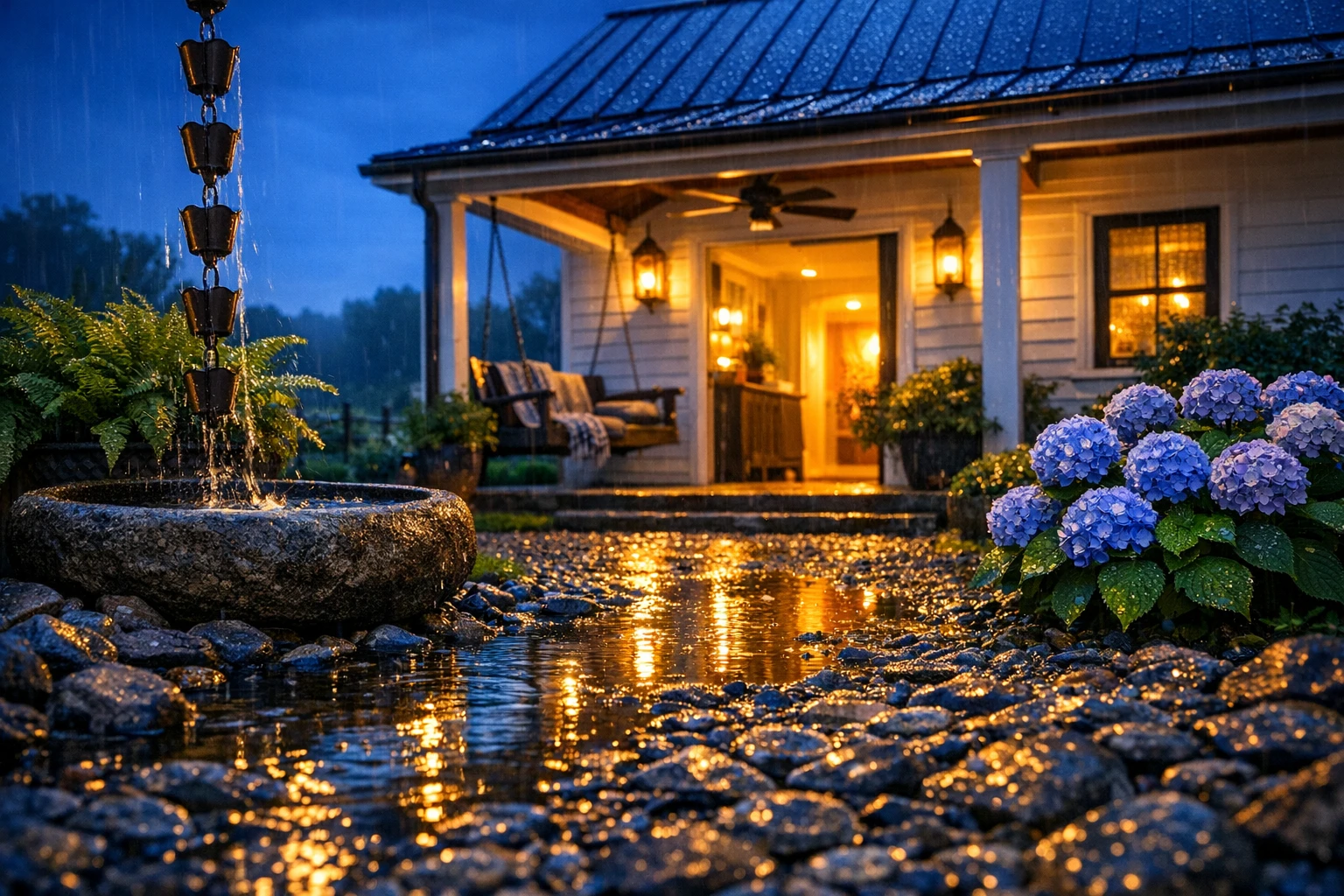
When people imagine a farmhouse, they often picture distance, weathered timber, and a lantern glowing near dusk. The charm is real, but the best mini farmhouses succeed because they turn that feeling into a durable, efficient place to live. Beauty invites interest; function is what makes the idea last.
Designing a Small Footprint That Feels Generous
The success of a mini farmhouse depends less on square footage than on planning. A small home fails when every room tries to act like its larger counterpart. It succeeds when each area is asked to do exactly what the household needs, no more and no less. This is why layout is the central design challenge. In compact homes, bad planning is impossible to hide. A door that swings into the wrong place, a hallway that steals usable area, or a kitchen with awkward circulation will be noticed every day.
One of the smartest design principles is to prioritize shared space over unnecessary separation. Open-plan kitchen, dining, and living zones often work well in mini farmhouses because they reduce walls, allow daylight to spread farther, and make the home feel connected. That does not mean every compact house should be fully open. Some separation is helpful for acoustics, privacy, and storage. The key is to place walls where they solve problems rather than where convention expects them.
Ceiling height also changes how space is perceived. A home with an 8-foot ceiling can be comfortable, but a vaulted living room or slightly taller main area often creates a feeling of volume that far outweighs the actual added square footage. Windows play a similar role. Well-placed windows on two or three sides of a room can make even a modest living area feel expansive, especially when they frame fields, trees, or a simple garden. In a mini farmhouse, the outside is part of the interior experience. The landscape becomes borrowed space.
Storage requires careful honesty. People are often told to declutter, but a house still needs places for everyday objects. Good mini farmhouse design includes storage at multiple scales: • A mudroom or entry wall for coats, boots, and utility items. • Deep kitchen drawers and pantry shelving rather than scattered upper cabinets alone. • Built-in benches with hidden compartments. • Under-stair storage where lofts or second levels exist. • Bedroom wardrobes sized for real seasonal use, not just idealized minimalism.
There are useful layout comparisons worth considering. A one-story mini farmhouse is often easier to age into, simpler to clean, and safer for households with mobility concerns. A lofted design can save footprint and create visual drama, but it introduces ladder or stair challenges and may reduce comfort for taller occupants. A central great room gives a social feel and works well for entertaining, while a split-bedroom plan creates privacy for guests or children. None of these options is automatically right. The best choice depends on household size, climate, routines, and the role of the house itself.
Exterior features deserve the same attention as interior rooms. Covered porches, breezeways, outdoor dining pads, and gravel courtyards can effectively enlarge living space at a lower cost than building enclosed square footage. A porch is especially powerful because it acts as a threshold between work and rest. You step out with coffee, hear wind in the grass, and the house seems to exhale with you.
In practical terms, strong design in a mini farmhouse means creating flow, reducing wasted corners, and making every surface matter. When that happens, the house feels not small, but precise. It begins to resemble a well-packed travel bag: nothing extra, nothing missing, and everything ready when needed.
Materials, Construction Choices, and Realistic Cost Planning
Cost is one of the main reasons people become interested in mini farmhouses, but it is also where expectations need the most discipline. A smaller home usually costs less overall than a larger one because there is less foundation, less roofing, less siding, and fewer square feet to heat and cool. However, the cost per square foot is not always dramatically lower. Kitchens, bathrooms, mechanical systems, and custom detailing still carry fixed expenses, and compact homes often ask for built-in storage or carefully tailored millwork. In other words, smaller does not automatically mean cheap. It often means more selective.
One major decision is whether to build custom, use a stock plan, or buy a prefab or modular structure. Custom designs can fit a site beautifully, respond to climate, and solve specific household needs, but they usually require more time and professional input. Stock plans reduce design costs and speed up early decisions, though they may need adaptation for local codes or personal priorities. Prefab and modular homes can shorten construction timelines and reduce weather delays, especially when labor is scarce. Yet transport, site preparation, and finishing work can still add meaningful cost. The right option depends on budget, timeline, and how unique the property conditions are.
Material choices shape both appearance and long-term ownership experience. Durable exteriors such as fiber cement siding, standing seam metal roofing, or well-installed wood cladding can suit the farmhouse look while offering different maintenance profiles. Metal roofs often last a long time and shed rain and snow effectively, though initial cost can be higher than asphalt shingles. High-quality windows matter more in a small home because every opening has a larger effect on comfort and energy performance. Good insulation and careful air sealing are equally important. A draft in a compact house is noticed immediately.
Several budgeting truths are worth keeping in mind: • Site work can surprise first-time builders, especially on rural land with grading, well drilling, septic installation, or long driveway runs. • Simpler forms usually cost less. A clean rectangular footprint is often more affordable than a house with many corners and roof intersections. • Utility planning matters early. Heating, cooling, water heating, and ventilation systems should fit the actual scale of the home rather than oversized assumptions. • Finishes can be upgraded later more easily than structure. Spending on the shell and envelope first is often the safer move.
Energy use is another area where mini farmhouses often perform well. Less volume usually means lower energy demand, particularly when the building envelope is strong and the home is oriented for sunlight and shade. South-facing windows may help with winter light in some climates, while roof overhangs and shade trees can reduce summer heat gain. Owners interested in resilience sometimes pair these homes with rainwater catchment systems, solar panels, backup wood stoves, or high-efficiency mini-split systems. Not every property is suitable for off-grid living, and many households prefer standard utility connections, but compact homes make efficient systems easier to size correctly.
There is also a maintenance argument in favor of building small. Painting fewer surfaces, replacing fewer flooring materials, and managing a smaller roof all reduce future burdens. For owners who value time as much as money, that matters. A mini farmhouse should not be viewed as a shortcut to effortless living, but it can be a disciplined approach to spending. When materials are chosen for durability and systems are designed with care, the result is a house that looks warm and grounded while avoiding many of the hidden costs that follow oversized homes for decades.
Land, Lifestyle, and the Everyday Rhythm Around a Mini Farmhouse
A mini farmhouse rarely exists as an isolated object. Its full meaning appears when you consider the land around it and the habits it encourages. Even a modest plot can transform the experience of a compact home. A small orchard, raised vegetable beds, a gravel drive, a rain garden, or a fenced yard for dogs changes the way the house is used and remembered. In many cases, the appeal is not about full-scale farming at all. It is about gaining enough outdoor space to cook, grow, repair, store, gather, and rest in a way that feels connected to season and weather.
This is where mini farmhouses differ from generic small homes. The farmhouse idea suggests work, durability, and relationship to place. That does not mean every owner needs chickens, tool sheds, or canning shelves. It means the home is often designed with practical rural or semi-rural life in mind. A deep sink becomes useful after gardening. A mudroom suddenly earns its place during wet weather. A porch ceiling fan matters on warm evenings. Windows over the kitchen counter are appreciated more when they look onto fruit trees or a vegetable patch instead of a neighboring wall.
Still, lifestyle dreams need reality checks. Land use is regulated in many locations through zoning, building codes, septic rules, well permits, fire access requirements, and limits on accessory structures or livestock. Before imagining a compact homestead, buyers should investigate what is legally allowed on the property. Something as simple as adding a greenhouse, keeping hens, or building a guest cottage may require approvals. Rural land can also involve practical challenges that city buyers do not always expect, such as internet reliability, emergency access, road maintenance, drainage issues, and distance from schools or healthcare.
It helps to think of land use in layers: • Immediate living zone: porch, seating area, parking, entry path, utility access. • Productive zone: herb beds, vegetables, compost, tool storage, maybe a small coop where permitted. • Buffer zone: trees, fencing, drainage swales, meadow planting, privacy screening. • Future zone: room for a workshop, guest cabin, solar array, or expanded garden if goals change later.
Mini farmhouses are especially attractive to several audiences. Remote workers may want a quiet home with a separate nook for focused work and better access to nature. Retirees often appreciate lower upkeep and the ability to age comfortably in a smaller, better-planned house. Young couples may see a mini farmhouse as an achievable first build on family land or in a lower-cost rural area. Some owners use them as weekend homes and discover that the rituals become the real luxury: opening shutters in the morning, hearing rain on a metal roof, carrying herbs from a garden to the kitchen, or watching dusk settle from a porch rail worn smooth by use.
Those details matter because a good mini farmhouse does more than save square footage. It edits daily life. It invites slower transitions, clearer priorities, and more direct contact with the practical world. The house asks less of its owner in some ways, yet gives more back through use and atmosphere. That balance is why so many people find the idea compelling. It is not about pretending to live an old rural life. It is about shaping a modern one with more intention.
Conclusion for Future Owners Considering a Mini Farmhouse
If you are part of the audience drawn to mini farmhouses, the most useful question is not whether they are charming. They clearly are. The better question is whether their scale, layout, and land relationship support the life you actually want to lead. For some people, a mini farmhouse is an elegant answer to rising housing costs and unnecessary excess. For others, it becomes a retreat from urban pressure, a retirement plan, a guest house, or a first step toward a more hands-on way of living. Its value comes from fit, not fantasy.
The strongest candidates for this kind of home usually share a few traits. They are comfortable making deliberate choices about possessions. They care more about a good kitchen, a practical entry, and a livable porch than about owning a long list of rarely used rooms. They understand that beauty works best when it serves routine. They are also willing to think ahead about climate, maintenance, and local regulation, rather than focusing only on inspirational images. In that sense, choosing a mini farmhouse is not mainly a style decision. It is a planning decision supported by taste.
Before committing, future owners should walk through a simple evaluation process. Start with household size and daily patterns. How many people will live there full time, and what level of privacy do they need? Next, think through the site. Is the land flat, serviced, and accessible, or will it require major site work? Then consider time horizon. Is this a starter home, a long-term primary residence, or a second property with occasional use? The answers will shape everything from foundation type to storage needs. A beautifully designed 700-square-foot home can feel generous for one household and cramped for another.
It is also wise to compare mini farmhouses with nearby alternatives. In some markets, renovating a small existing rural house may be cheaper than building new. In others, a modular build may provide better value than a custom plan. Some buyers may discover that what they really want is not a farmhouse specifically, but a modest, durable house with strong indoor-outdoor connections. That is still a useful conclusion. The style should serve the goal, not dominate it.
For readers who feel pulled toward this path, the encouraging news is that a mini farmhouse can offer unusual balance. It can be modest without feeling sparse, warm without becoming precious, and efficient without losing character. The best versions prove that careful design can replace sheer scale. They show that smaller homes can still hold comfort, work, memory, and beauty in satisfying measure.
In the end, the appeal is simple. A mini farmhouse asks you to build or buy with intention, to use space with intelligence, and to let the surrounding land play an active role in daily life. If that sounds less like a compromise and more like relief, then this type of home may be worth serious consideration. For many modern readers, that is exactly why the idea continues to grow: it feels grounded, practical, and human-sized in a world that often pushes in the opposite direction.